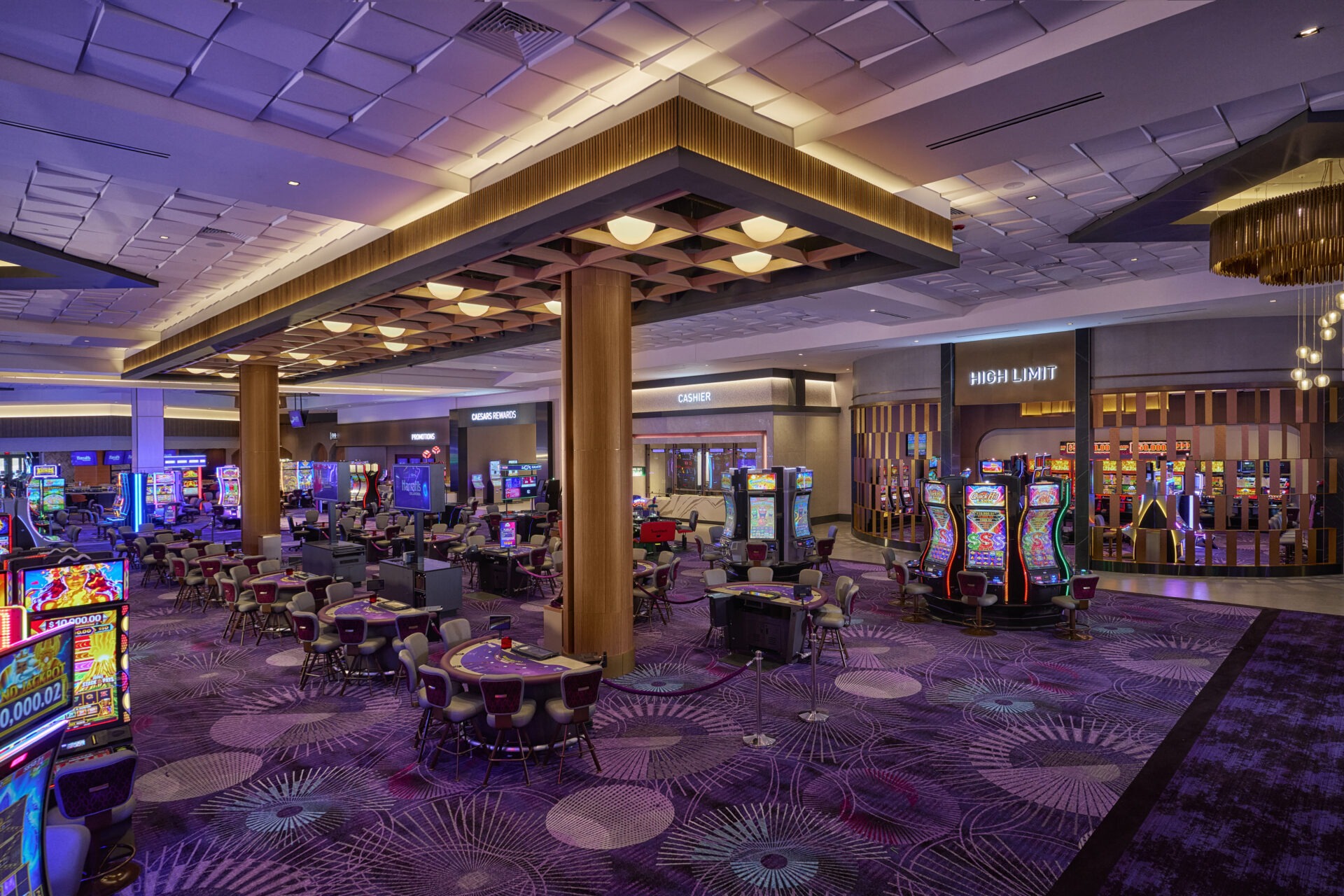
CHANDLER, Okla.—Harrah’s Oklahoma has officially opened in Chandler, marking the first Caesars Entertainment-managed property in the state and establishing a new destination for tourism and entertainment.
Developed in partnership with the Iowa Tribe of Oklahoma, the casino celebrated its grand opening with a ribbon-cutting ceremony featuring tribal and company leadership, along with first bets, live entertainment, local celebrity appearances, and a fireworks finale. Oklahoma football legends Barry Switzer and Bob Stoops participated in ceremonial first plays on the casino floor during the opening festivities.
The property includes 12 table games, more than 1,000 slot machines, and a high-limit gaming area. It also features multiple dining options, including Arrow & Ember, which serves contemporary American fare, and Dash Café, offering quick-service items, such as burgers, pizza, and breakfast burritos. Guests can also earn and redeem Caesars Rewards, the company’s loyalty program, at the property, as well as at its other destinations across the country.
“This is a milestone moment for our team, our partners, and the Chandler community,” says Joe Scibetta, senior vice president and general manager of Harrah’s Oklahoma. “We’re proud to officially open our doors and introduce a destination that delivers the Harrah’s experience while creating something new and exciting for Oklahoma.”
For the Iowa Tribe of Oklahoma, the project represents an economic opportunity.
“This partnership reflects our long-term commitment to economic growth and opportunity for our people,” says Jake Keyes, chairman of the Iowa Tribe of Oklahoma. “Harrah’s Oklahoma brings new energy to our community and creates meaningful opportunities for future generations.”
The development is expected to create more than 300 jobs across gaming, hospitality, food and beverage, facilities, security, and administrative operations.
Located along the Route 66 corridor, the casino is expected to draw visitors from across Oklahoma and neighboring states, positioning it as a regional tourism anchor while highlighting collaboration between tribal and corporate partners.