Event Planners’ Guide to Washington, D.C.
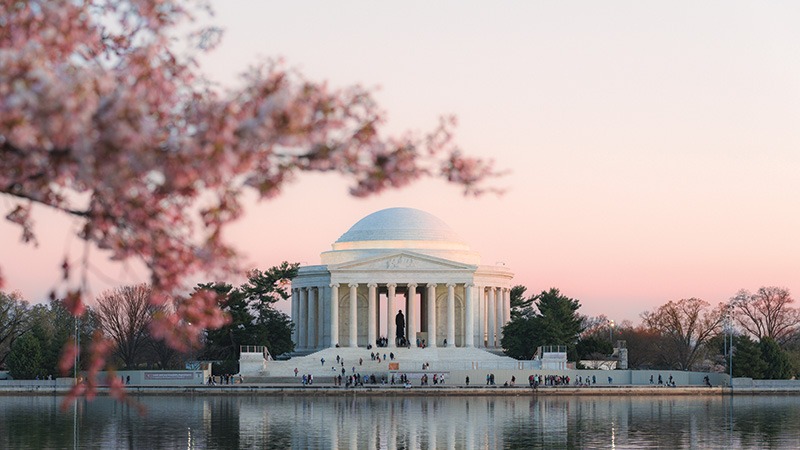
There is only one D.C. With internationally famous monuments and attractions, some of the most-visited museums in the world, distinctive venues, and unparalleled access to think tanks, financial institutions, organizations and associations, and dozens of embassies, Washington, D.C., provides planners with unique options not found elsewhere. This pedestrian-friendly city, with easy access to three international airports, emphasizes sustainability and welcomes meetings and events of all sizes, from large-scale conventions to intimate gatherings.
Washington, D.C., offers an endless array of top-tier venues, hotels, and more than 100 free activities at iconic landmarks. Beyond its acclaimed dining scene, the nation’s capital provides unmatched access to intellectual leaders and world-class facilities.
“Washington, D.C., is a place where people come together to share ideas, learn, and feel inspired,” says Elliott L. Ferguson II, president and CEO of Destination DC. This year, the city takes center stage for America’s 250th birthday, offering groups a once-in-a-lifetime opportunity to experience national history and festivities in the heart of the capital.
Washington, D.C., is divided into four quadrants that surround the U.S. Capitol. Planners considering D.C. have their pick of diverse neighborhoods, from historic Georgetown to the dynamic Navy Yard. The region is served by three major airports: Ronald Reagan Washington National Airport (DCA), Dulles International Airport (IAD), and Baltimore/Washington International Thurgood Marshall Airport (BWI). D.C. is also a primary Amtrak hub via Union Station. D.C. also has an efficient Metro transit system, approximately 7,000 Capital Bikeshare rentals, and pedestrian-friendly streets.
D.C.’s Walter E. Washington Convention Center, an LEED Platinum-certified facility, features 700,000 square feet of exhibition space and 77 meeting rooms. The convention center is within walking distance of nearly half of the city’s guest rooms. Beyond the convention center, through Destination DC’s Connected Campus initiative, planners can utilize a network of nontraditional spaces across five distinct campuses:
- Capitol Riverfront Campus: Anchored by Nationals Park and Audi Field, this area includes seven hotels and 23,000 square feet of event space.
- Downtown DC Campus: Centered around
the Ronald Reagan Building and International Trade Center, the area boasts more than 2,300 guest rooms and 132,000 square feet of meeting space. - Wharf Campus: A waterfront hub anchored by The Anthem and Arena Stage at the Mead Center for American Theater, the area features more than 800 guest rooms and 24,000 square feet of meeting space.
- National Mall Campus: Centered at the International Spy Museum, this campus offers 1,700 guest rooms and 70,000 square feet of meeting space near historic landmarks.
- Connecticut Avenue Campus: Anchored by the Omni Shoreham and Washington Hilton, the campus has 1,900 guest rooms and 200,000 square feet of event space across 70 rooms.
Destination DC’s Connected Capital strategy focuses on sector-specific platforms linking events with the city’s intellectual capital in policy, technology, healthcare, and finance. “By aligning conferences with D.C.’s subject matter experts, the city elevates every event with insights no other destination can match,” Ferguson says.
The city’s startup scene is thriving in cybersecurity and AI, supported by innovators like Cloudflare and EchoStar. Station DC, an innovation hub in Union Market, recently opened to bring together startups and policy leaders. “Planners are choosing a community of innovators,” says Melissa A. Riley,
senior vice president of convention sales and services for Destination DC. “That human connection fuels deeper learning and more meaningful outcomes.”
In 2017, Washington, D.C., became the world’s first LEED-Platinum city. Planners can utilize the Sustainability District—the city’s network of more than 75 hotels, venues, and restaurants committed to recycling, composting, and energy conservation—to minimize the hospitality industry’s environmental footprint.