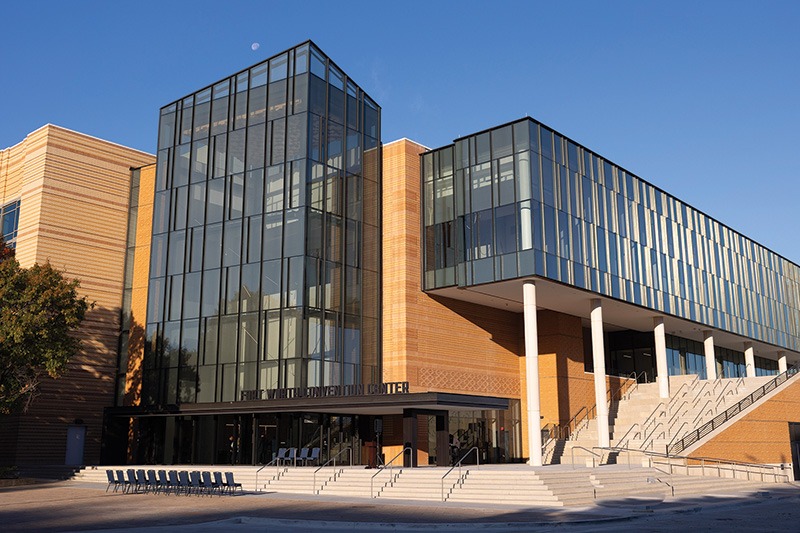
In 2022, when the City of Fort Worth, Texas, announced the architectural and design firms selected to lead the expansion project of its convention center, it wasn’t long before other cities in the Lone Star State followed suit with their own convention center improvements. Now, its neighbors to the east and south are experiencing their own transformative era for Texas meetings and events. Once completed, the new, newly renovated, and newly expanded convention centers will mirror national trends in attendee and planner preferences, and are likely to impact meetings—and future meeting facilities—across the South.
While they say everything is bigger in Texas, size is not necessarily the driving factor in the reimagining of Kay Bailey Hutchison Convention Center in Dallas, George R. Brown Convention Center in Houston, and Austin Convention Center in the state capital. By essentially starting over with their largest event facilities, these tier-one destinations are constructing an environment uniquely tailored to the needs of today’s meeting planners—delivering more flexibility, personalization, and utilitarianism.
Not an inch of space will go to waste inside or outside Texas’ premier convention centers. While attendees will spend plenty of time within the behemoth buildings, the convention experience extends far beyond the convention center walls. This trend is evident not only in Texas but also all throughout the South.
Close encounters
In most major metropolitan regions, the convention center increasingly serves as a hub for restaurant and retail development, putting attendees within walking distance of multiple hotels, dining options, local shops, and area attractions. The proximity to everything dramatically cuts transportation costs, facilitates group outings, and enhances attendees’ overall event experience. This includes ensuring bathrooms, hallways, entrances, and other touchpoints accommodate attendees with mobility and other sensory challenges.
“Event planners today are focused on creating environments that foster connection, comfort, and inclusivity,” says Kim Allison, vice president of convention sales for Atlanta’s Georgia World Congress Center (GWCC).
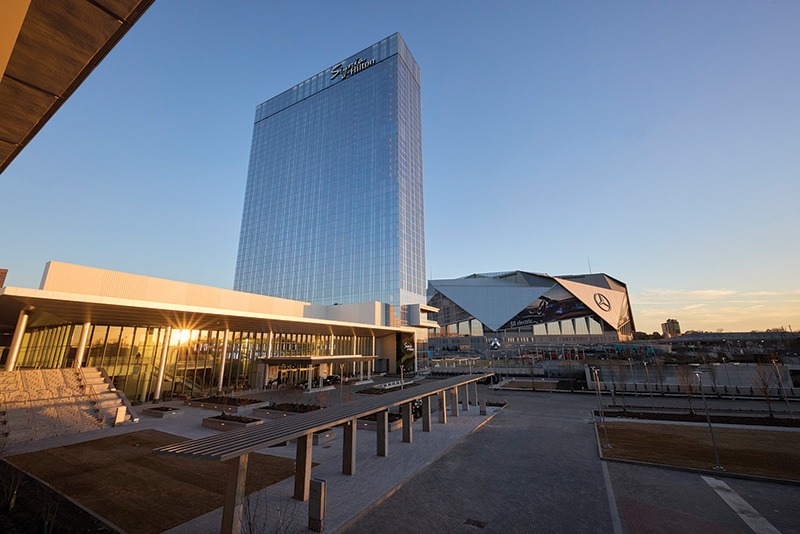
An Atlanta landmark in its own right, GWCC is steps from Mercedes-Benz Stadium and State Farm Arena professional sports venues, which also host concerts and other special events. Recent improvements at GWCC include the addition of a walkable path connecting outdoor spaces with the new Signia by Hilton Atlanta hotel.
According to Allison, GWCC is seeing strong demand for dedicated networking
and gathering areas—spaces like lounge pods and “couches and conversations” zones, which encourage meaningful interaction. “There’s growing emphasis on variety and convenience—from expanded food and beverage options to easy navigation through clear signage and efficient vertical movement,” she says.
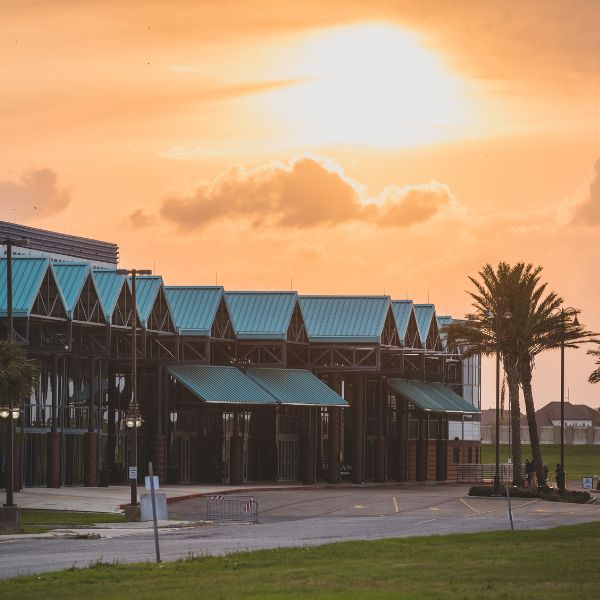
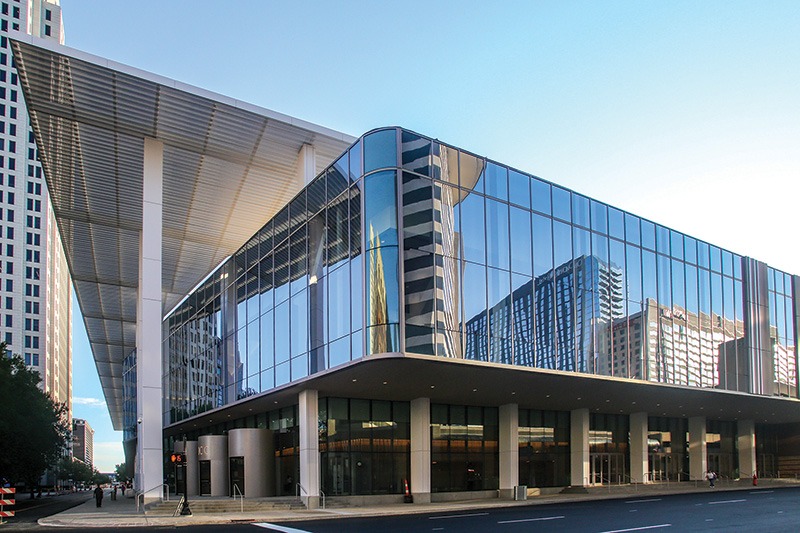
Likewise, upgrades to New Orleans Ernest N. Morial Convention Center have dramatically improved the surrounding area. A former boulevard was converted in 2020 into a 7.5-acre pedestrian park, which serves as a gathering area and a transportation hub, according to Elaine Williams, chief commercial officer for the convention center.
Keeping up
Complete teardowns are not an option, or necessary, in Atlanta and New Orleans. Yet officials in both destinations feel the pressure from renovations and rebuilding elsewhere.
“It’s not easy when you’re competing with the shiny new penny,” Williams says.
New convention centers are attractive options for meeting planners. Since completing renovations in 2018, Kentucky International Convention Center in Louisville has hosted several large industry events, including MPI’s World Education Congress in 2024. The facility is one of a handful of convention centers in the country equipped to comfortably host groups of more than 10,000 attendees.
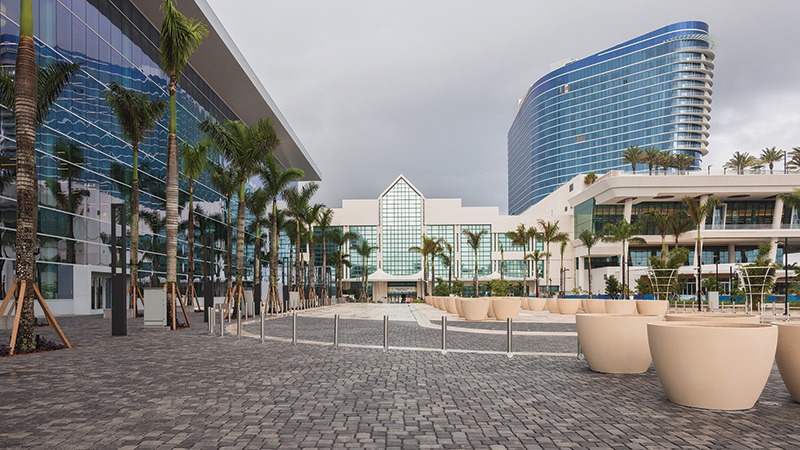
In Fort Lauderdale, Fla., the $1.2 billion Broward County Convention Center expansion project celebrated the grand opening of the 29-story, 801-room Omni Fort Lauderdale in December 2025, which serves as the convention center’s headquarters hotel. In October 2025, the convention center debuted its new east wing, adding more meeting space and an exhibit hall; the convention campus also includes a six-acre outdoor plaza with restaurants and features landscaping to create a park-like atmosphere.
“The expansion of Broward County Convention Center, along with the opening of the adjacent Omni Fort Lauderdale, marks a new era for meetings in Greater Fort Lauderdale,” says Stacy Ritter, president and CEO of Visit Lauderdale. “With unbeatable access to the airport, cruise port, downtown, and beaches, we’re delivering exceptional value for planners looking to create seamless, high-impact events with waterfront views.”
Common goals
Costly convention center renovations are a necessity for staying competitive, according to officials. “Investing in convention center upgrades is ultimately an investment in the city itself,” Allison says. “We must continually invest not only in the building but also in the people who bring it to life—recruiting, developing, and retaining talented staff who ensure every event runs seamlessly. These costs translate directly into positive impressions, repeat business, and a stronger reputation for the city as a premier destination for meetings and events.”
Rather than continuing to fight an uphill battle, Austin took the extraordinary step of demolishing its convention center, leaving the capital city without its top meetings facility until the new center opens before festival season in 2029. Until then, associations and other large-scale events must make use of meeting space in the city’s array of hotels, or relocate to other destinations.
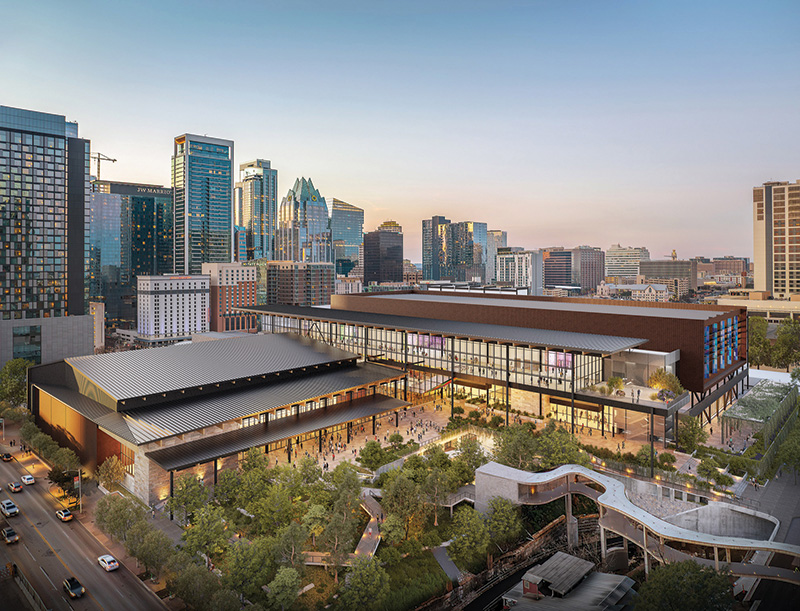
Steve Genovesi, executive vice president of Visit Austin, says the CVB had to turn away nearly 50% of business inquiries due to the size constraints of the former convention center. The new convention center will significantly increase its rentable space to 620,000 square feet.
“Austin’s initiative is unique in that the new convention center is designed to be a larger, more efficient facility on the same size footprint as the original facility, transforming the surrounding Palm District into a community-centric destination,” Genovesi says. “We are positioning Austin to compete for the next tier of convention business and attract events that previously couldn’t consider our city due to the convention center’s space limitations.”
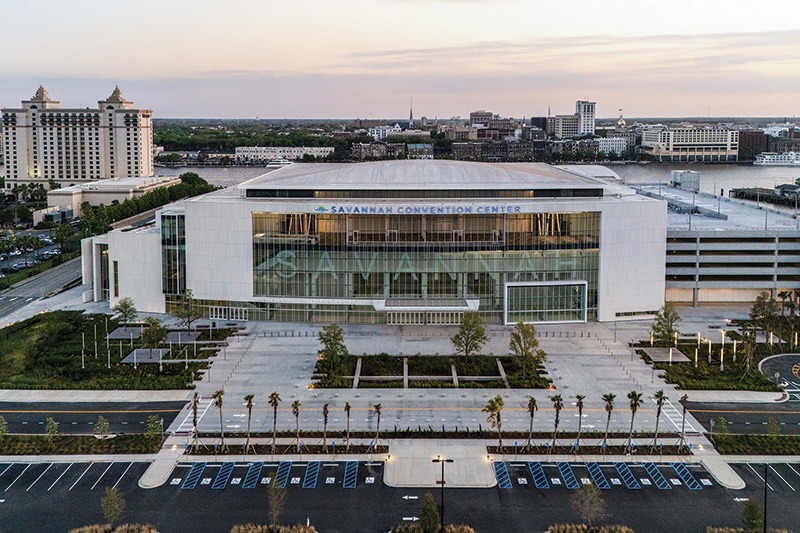
The Savannah Convention Center (SCC) in coastal Georgia recently completed a major expansion, doubling in size to more than 630,000 square feet. “The Savannah Convention Center expansion strengthens our ability to attract national associations, major trade shows, and citywide conventions that drive hotel stays, restaurant business, and retail activity throughout the region,” says Freida Brady, vice president of sales and marketing for SCC. “These events sustain and grow the roughly 28,000 hospitality-related jobs in the Savannah area. Every event we host fuels a network of economic activity that extends well beyond our walls, benefiting the entire community.”
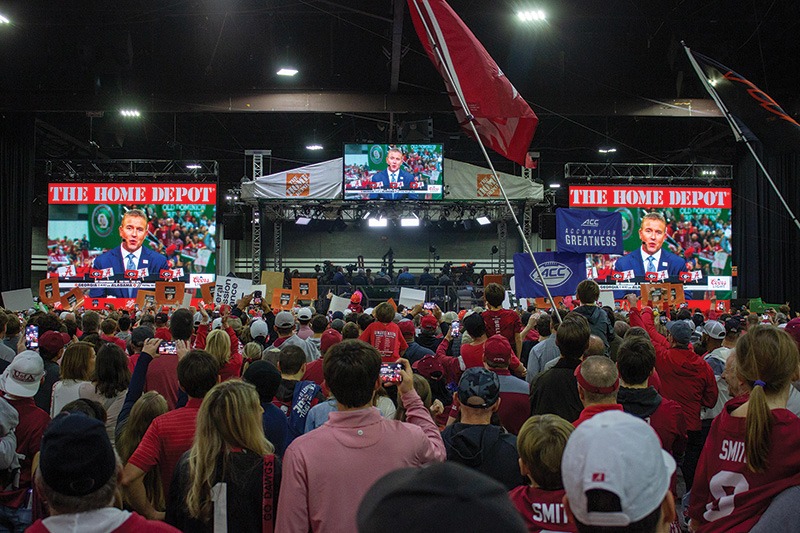
In Dallas, the expansion of Kay Bailey Hutchison Convention Center will improve not only the attendee experience but also the local community, through additional development, according to Craig Davis, president and CEO of Visit Dallas. “We’ll finally reconnect downtown with the other part of Dallas, which will unlock the opportunity to bring a lot more development into that area, which we desperately need,” he says.
Maintaining sustainability
The same principles driving investments in creating convention campuses—including sustainability, connectivity, and eco-centric spaces—are spurring improvements within convention centers.
In New Orleans, new upgrades like LED lighting, water-bottle refill stations, and repurposed phone-bank charging lounges themed after New Orleans neighborhoods helped Ernest N. Morial Convention Center earn LEED Gold certification in 2022 and again in 2025, according to Williams. “It’s protecting our future,” she says. Additional interior renovations included new carpet, modernized walls, updated lighting, and replacing incandescent bulbs with energy-efficient LED bulbs.
Walter E. Washington Convention Center in Washington, D.C., was awarded LEED Platinum certification in 2024. Eco-friendly initiatives included upgrading lighting, heating, and cooling systems, which resulted in reducing energy use by 25,306,767 kBtu—equivalent to removing approximately 440 cars from the road for a year—and integrating new water efficiencies throughout the facility,
which reduced water consumption by 3,790,000 gallons—enough to fill approximately six Olympic-size swimming pools.
According to Genovesi, the new Austin Convention Center is designed with the goal of becoming the world’s first zero-carbon-certified convention center. According to Visit Austin’s website, details include a solar-ready roof design, advanced building systems, and high-performance materials designed to cut emissions and operating costs. The facility will run on 100% renewable energy with a vision to achieve ILFI Zero Carbon certification and align with the Austin Climate Equity Plan.
Taste of the city
Convention centers are also emphasizing improvements in food and beverage offerings.
Savannah Convention Center uses fresh, seasonal ingredients in creating health-conscious menus, which further adds to the destination’s foodie reputation, according to Brady.
New Orleans is also known for its cuisine. Sodexo LIVE!, the onsite caterer at Ernest N. Morial Convention Center, makes local favorites like po’boys, black-eyed pea chili, and beignets a priority.
According to Allison, alcohol consumption is declining, especially among younger attendees, and functional, unique nonalcoholic offerings are gaining popularity. “Overall, the focus has moved toward creating memorable, guest-centric dining experiences that reflect modern preferences and values,” she says.
Venues like GWCC have the versatility to reimagine existing spaces into the meeting’s desired atmosphere. For a recent trade show, the built-in registration hall at GWCC was converted into a centrally located beer garden for a fun happy hour, Allison says. Also at GWCC, a concessions area outside an exhibit hall was transformed into an Apple-inspired Genius Bar for a tech-based association’s product demos.
Creative outlets
Few elements of meetings showcase an organization’s innovative side like audiovisual. Multi-sensory tools, including display walls, digital signage, and presentation stages with large video screens, are designed to create immersive experiences, ease traffic flow, and highlight branding.
Such signature audiovisual pieces are no longer nice-to-haves but expected, from planners trying to accomplish their organizations’goals and from attendees aiming to make the most of their conference experience.
Audiovisual is arguably the highest line item in a planner’s budget. Among the biggest sticking points between planners and venues is whether Wi-Fi is part of the baseline convention package or carries an additional charge to cover the extra bandwidth required for attendees’ many devices. Industry insiders have noticed the shift. “Wi-Fi is evolving from an add-on to a standard service expectation,” Brady says.
At Ernest N. Morial Convention Center, Williams says the team works diligently to help alleviate audiovisual costs. The convention center’s in-house audiovisual production team gives planners flexibility: full-service production or hybrid support in coordination with their own audiovisual partners to reduce costs. However, not all meeting venues allow outside vendors.
For those meetings investing heavily in audiovisual production, the results are obvious. “Now we’re seeing people take their sessions that would normally be in meeting rooms and having those sessions on the show floor,” Williams says. As Williams recalls, the American Heart Association’s fall 2025 trade show in New Orleans involved installing interactive venues on the trade-show floor and breakout session spaces. Advanced production elements included noise control, wireless audio, and attendee headsets, which helped prevent disruptions to concurrent aspects of the meeting.
According to Allison, smart organizations are ensuring functionality with striking visuals. “Larger groups have leveraged branding and wayfinding, integrating their logos or themed graphics throughout the GWCC venue,” she says.
No standing still
One thing is clear from the boom in convention center development: Destinations won’t and can’t stand by and watch competing cities attract new business.
Not long after Fort Worth began its project, Dallas and Austin launched their own developments. Not to be outdone, Houston took advantage of a change in Texas legislature, which allows local communities to receive incremental hotel occupancy tax revenue within an area around their respective convention center—revenue that otherwise would have gone to the State. Previously, the law only applied to Fort Worth and Dallas.
Houston’s new George R. Brown Convention Center will have a state-of-the-art ballroom (the largest in Texas), more flexible meeting spaces, and an indoor-outdoor flex hall opening onto an event plaza, according to Michael Heckman, president and CEO of the Houston First Corp. The work, scheduled for completion in 2028, is being done in phases to ensure the center remains operational. Likewise, the Kay Bailey Hutchison Convention Center in Dallas remains open and will serve as the media center for the 2026 FIFA World Cup.
Heckman says it’s essential to maintain momentum, even if upgrades are necessary. “If you’re not moving forward, you’re losing ground,” he says.
Austin’s Workarounds
Without its convention center, the Austin Tourism Public Improvement District (TPID) will do the heavy lifting to attract businesses and associations, according to Visit Austin’s website. The Austin TPID is a 10-year service plan, beginning in 2025 and running through 2035, designed to provide supplemental funding for tourism sales and marketing with the aim of increasing hotel activity and supporting the Austin tourism ecosystem during and after the closure and redevelopment of the Austin Convention Center. Incentive plans are in place for planners when hosting events in Austin’s hotels.
Visit Austin’s website includes many properties to consider for meetings, from budget-friendly options to boutique properties to upscale hotels, including: J.W. Marriott Austin, with 1,012 guest rooms and more than 120,000 square feet of flexible meeting space; Four Seasons Hotel Austin, with 286 rooms and 23,724 square feet of event space; and The AT&T Hotel and Conference Center, with 297 guest rooms and 85,000 square feet of meeting space. In addition, Austin’s Red River Collection offers three options: Fairmont Austin, with 1,048 guest rooms and more than 140,000 square feet of event space; Hilton Austin, with 801 guest rooms and more than 95,000 square feet of event space; and Hotel Van Zandt, with 397 guest rooms and more than 13,000 square feet of event space.
Convention Center Developments
Major convention center projects in the works or recently completed include:
- Broward County Convention Center: Added an east wing and an exhibit hall in October 2025 and an adjacent Omni headquarters hotel in December 2025.
- Fort Worth Convention Center: Completed Phase 1 in December 2025, which included new F&B facilities, demolition of the annex, the addition of a lightbox atrium southeast entrance and terrace, additional loading docks, and realignment of Commerce Street to make way for a future convention hotel.
- Austin Convention Center: Demolition occurred in April 2025; it will reopen in 2028.
- Kay Bailey Hutchison Convention Center, Dallas: Work is ongoing while the facility remains open in a limited capacity. Large events are relocating to other destinations until 2029.
- George R. Brown Convention Center, Houston: Adding a south building (opening 2028), with plans to renovate the existing facility at a later date.
- Orange County Convention Center, Orlando, Fla.: Groundbreaking in December 2025 for the facility’s Grand Concourse Expansion; the $560 million project will enhance the North-South Building with new meeting space, a grand ballroom, improved connectivity between concourses, and will add 44,000 square feet of meeting space and a 100,000-square-foot ballroom. Construction is expected to be completed in 2029.