Half the fun of visiting a new city or region is sampling the local dining and drinking options. The South has long been a treasure trove of tasty eateries, from mouth-watering seafood and barbecue to four-star nouveau cuisine bistros. For meeting and convention attendees, sharing a meal with other colleagues can be a highlight of the experience. Chefs are artists, and their palette is the dinner table; indulging in the art of the group meal can create memories and opportunities for attendees to bond.
What is it about breaking bread with our colleagues, friends, and family that creates that camaraderie? “Across the globe, food is not just a means to nourish oneself—it can be a cause for celebration,” says chef Pavy Keomaniboth, with Hyatt Centric Beale Street Memphis (Tenn.). “Whether it be for a good harvest, birthday, wedding, or otherwise, food is a way to bring people together over a shared experience by swapping favorite recipes and culinary traditions. In the South, you clearly see it with certain staples. It becomes a talking point in bonding people together.”
One could argue that dining tables are replacing golf courses for sharing ideas and teambuilding when it comes to meetings and conventions. “You know, there is the classic saying, ‘Never make a decision on an empty stomach,’” Keomaniboth says. “I think that rings true. Not everyone plays golf, but everyone eats. Dining tables even the playing field to have those conversations—still in a relaxed setting, where you can bond over a favorite barbecue sauce or beverage.”
Making F&B a fun experience

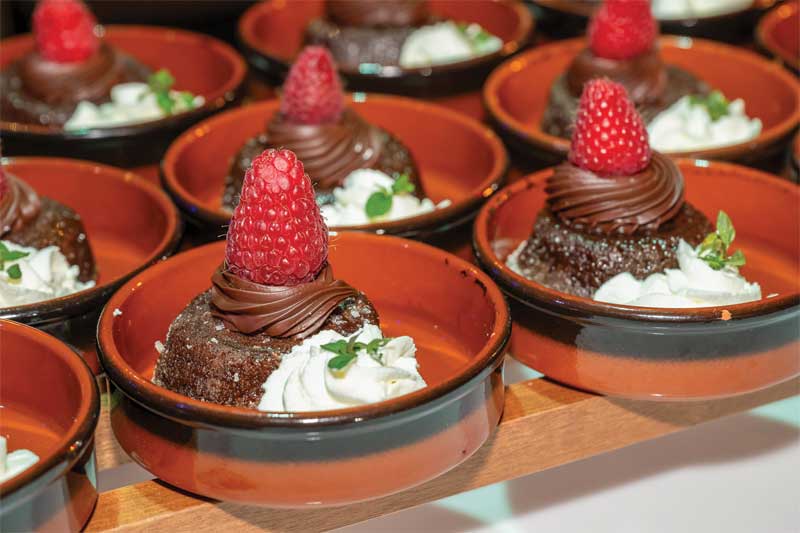
“People travel and seek out culinary experiences that allow them to experience the destination they are visiting,” says chef Brian Archibald, with Playa Largo Resort & Spa, Autograph Collection in Key Largo, Fla. “Many of our guests come to Playa Largo wanting the flavors of the islands: jerk spices, Key lime, and more. Popular menu staples tend to be grilled mahi-mahi, jerk chicken, roasted pig, Key lime tartlets, and our signature pineapple mojito, which reflects the property’s history as a once-booming pineapple farm.”
At Sheraton Dallas, guests enjoy a wide variety of dishes and drinks reflecting The Lone Star State’s diverse culinary influences. Executive chef Andrew Cardillo says Tex-Mex is a favorite among guests wanting to experience authentic flavors, with achiote chicken, carne asada, and Indian-inspired dishes popular for events.
“We have quality barbecue items, including ribs, sausage, and a smash burger, that we smoke in-house. We are continuing to drive barbecue in unique ways,” he says.
Cardillo adds that the hotel’s signature restaurant and bar, Open Palette, offers a diverse, rotating menu based on the seasons. “Our tortilla soup will match, if not exceed, some of the best in Dallas,” he adds, “And our tasty vodka pasta is a nod to my Italian roots.”
Fun food experiences, including demonstrations and themed menus, are gaining popularity at various resorts and hotels across the South. As Archibald explains, “At Playa Largo, we pride ourselves in food experiences, from dining at a waterfront table while watching
the sunset at Sol by the Sea to a private cooking demonstration customized to your taste preferences in your guest bungalow,” he says.
Archibald and his team also create special themed meals for groups, including a Havana Nights-themed menu, featuring roasted pig, paletas, and other Cuban-inspired dishes. “Our themed dinner menus often inspire groups to plan their events using the same theme. We work closely with groups to coordinate and plan event menus just right for every occasion,” he says.
Sheraton Dallas features mixology and culinary classes suitable for fun teambuilding. Cardillo’s culinary classes include cooking barbecue, making homemade pasta, and building charcuterie boards. During each class, he demonstrates tips and tricks for preparing meals as professionals would, using tools commonly found in most home kitchens, and sharing ideas for substituting ingredients to suit personal preferences. “We can be flexible to meet the needs of any group,” he says. “These hands-on classes provide the opportunity for groups to socialize and bond as a team. They also create great memories of the event experience at our hotel.”
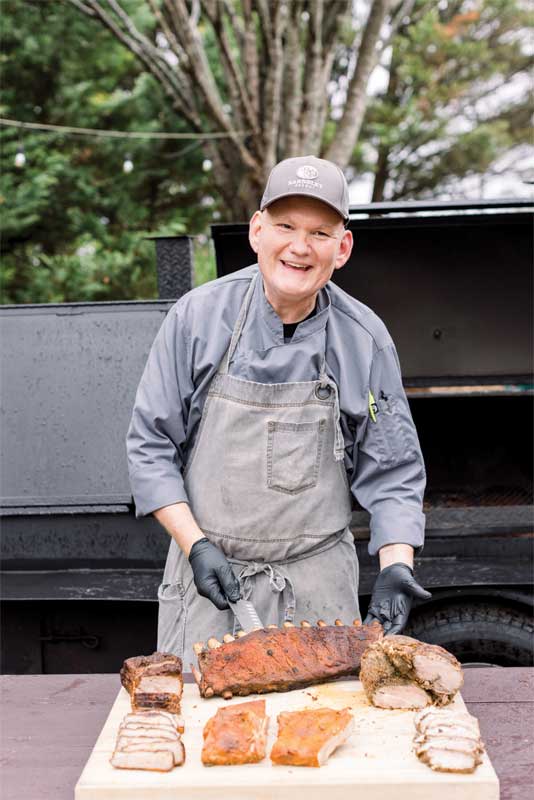
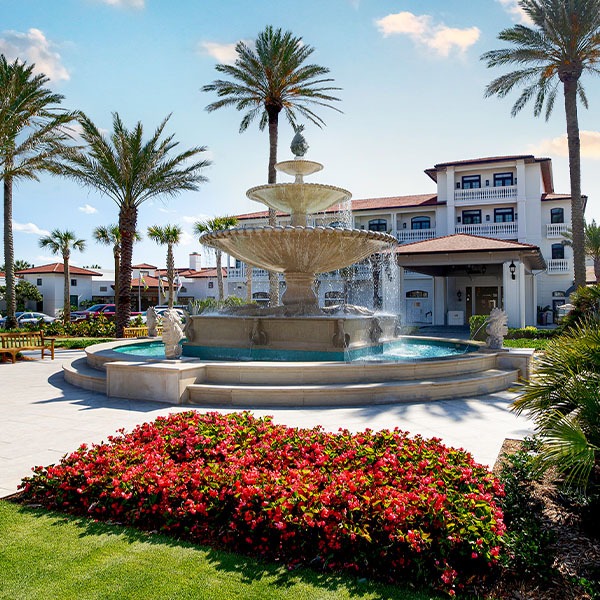
Barnsley Resort in Adairsville, Ga., is another site where guests can revel in culinary fun. “We are noticing that guests want to observe and be part of the cooking experience from beginning to end, not just eat the finished dish,” says Okan Hazar, director of resort food and beverage operations. “At Barnsley Resort, we combine that full-circle experience with a Southern staple: barbecue. Our team incorporates the house-made Season & Savor spice rub collection with pitmaster Paul Patereau’s live, open-fire cooking on the smoker for a one-of-a-kind experience for groups.”
Patereau studied at Peg Leg Porker, an award-winning restaurant in Nashville, Tenn., owned by pitmaster Carey Bringle and his wife, Delaniah. Bringle was invited to cook his award-winning barbecue at the James Beard House twice. “We are honored to have pitmaster Patereau as part of the Barnsley team,” Hazar adds.
Hazar says Barnsley Resort’s full-circle food experience can be seen also in its garden-to-table lunches and dinners at the Barnsley Farm. Farm chef Hugo Cifuentes invites groups to see and learn firsthand about tending a kitchen garden, then combines the garden ingredients and protein to prepare dishes using Sea Island Forge kettles. As Hazar explains, “The fire kettle is a versatile open-fire cooking method for enhancing dishes, such as rotisserie chicken. It allows Cifuentes to bring a creative flair to dishes.”
Barnsley Resort also offers hands-on pizza classes, in which guests can roll out their pizza dough and top it with an artisanal selection of cheeses, vegetables, and meats before cooking it in the resort’s Coppertop Pizza Co. wood-fired oven. The oven manipulates the heat source to create exceptional pies, combining conductive heat from the hearth, convection air heat from the flames, and radiant heat circulating in the oven dome.
Chefs are also noticing a trend in beverages. “While the classics always will remain in style, zero-proof options are growing in popularity and making their way onto menus more and more,” Hazar says. “These are not just fruit juices thrown in with some soda water. High-end non-alcoholic spirits and syrups are playing a big role in this field, elevating the craft mocktail for a premium, non-alcoholic beverage choice.”
Guests continue to enjoy traditional drinks, as well as seasonal signature offerings. “Bourbon is a core part of Barnsley Resort’s culture and is featured in our signature Old-Fashioned, a popular drink among guests year-round,” Hazar says. “During the spring and summer seasons, we routinely see a spike in cocktails with fresh botanicals from our onsite gardens. For instance, we have an expansive 100-year-old fig tree that produces fruit in late summer, allowing a seasonal signature cocktail derived from figs.”
Managing F&B costs
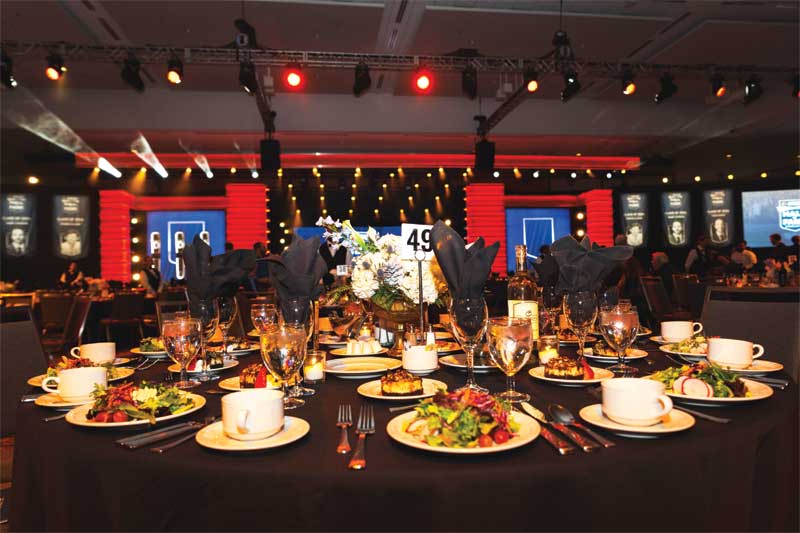
Meeting planners are feeling the pain of higher F&B costs. While food prices increased by 5.8 percent in 2023, all categories experienced slower food price growth—and food prices are expected to increase by only 1.3 percent in 2024, according to U.S. Department of Agriculture (USDA) economist Megan Sweitzer. “We expect that trend to continue, with slower growth and more price stability across some categories. We will see potential price decreases for some categories, including eggs, pork, cereal, fresh vegetables, and dairy,” she says. USDA.gov forecasts diverging price trends between food purchased at home (at grocery and other food stores) and food purchased away from home (at restaurants and other establishments), with prices for food away from home continuing to rise.
Where do planners draw the line on exorbitant F&B prices, while still providing guests with an enjoyable and memorable dining experience? How are hotels and convention centers working to cut down on waste and maintain quality with rising F&B costs? Archibald describes the “creative engineering” approach at Playa Largo, using less fluctuating or lesser market-driven items. “An example would be taking overpriced skirt steak and utilizing something unique, flavorful, and affordable instead, such as a Coulotte. We also utilize as many local south Florida artisan purveyors as possible, which keeps cost down without inflated shipping fees and, in turn, provides fresher quality and lower prices than imported ingredients,” Archibald says.
Many convention centers and event planners are finding creative ways to combat this in planning events. “Inflation has definitely affected every aspect of our industry,” says Ron Brown, F&B director of Jackson Convention Complex (JCC) in Jackson, Miss. “We average approximately 400 persons per event throughout the year. We use historical data when we calculate the amount of F&B for our events. Communicating with our vendors to find the best price and listening to our clients help us stay within our budgets and produce a superior product,” he says. “This is a very competitive industry, and our team at JCC has to focus on the smallest details.”
At Charlotte Convention Center (CCC) in Charlotte, N.C., the average size of groups is approximately 2,100 people per conference, according to Teddy Burgis, F&B director. Calculating F&B quantities for conferences involves many factors, such as attendee demographics and preferences, menu type, and service style, he says. Accurate calculations help maximize F&B servings and minimize waste. “After estimating the number of attendees, analyzing their preferences, and selecting menu items with event planners, we determine portion sizes per person, factoring in variations in appetite and dietary needs. The bulk order of products is based on calculated quantities while minimizing waste,” Burgis says, adding the number of serving points is also considered to ensure efficient service.
Lauren Kasle, business manager of One Touch Events in Atlanta, uses a similar calculated approach to determine F&B costs. “We provide our clients with a detailed line-item estimator that outlines, on a per-person basis, the total estimated costs of all (vendor) F&B-required minimums in comparison to clients’ event requirements,” she says. “Full transparency is the cornerstone to budgeting success.”
One Touch specializes in corporate retreats, workshops, conferences, and other events. “With budget and sustainability in mind, we craft solutions based on the clients’ needs, along with catering consumption trend analytics from our events of similar scale. Examples include reducing breakfast to grab-and-go, as breakfast produces the most waste of all program meals. We work with our catering partners on estimating consumption options to the penny with mandatory approvals for increase, onsite through our managing team lead,” Kasle says. “We also work with our clients to identify areas where we can enhance the gastronomic experience for guests and meet F&B minimums but also identify areas where we can cut out the fluff that does not move the experience needle, such as all-day beverage services and snack breaks scheduled too close to other meal times, and identify opportunities where a full guest-count guarantee is not required on consumption items.”
In Kasle’s experience, there are clear items that can be omitted from the event menu and others that must be included. “The must-haves across the board for groups, of all sizes, is caffeine. We do not skimp on coffee and hot water and tea selections,” Kasle explains. “We do, however, recommend cutting out or completely removing decaf coffee, as this is another largely wasted expense we have found across the board.”
Kasle also suggests rethinking cocktail and alcohol consumption as another way to trim costs. For groups requiring little to no alcohol, Kasle says there are fun ways to still meet F&B minimums. “We have worked with groups to include more mocktails, alcohol-free wines, and seltzers. Additionally, consumption by drink ticket with cash-bar combination has been well received by attendees and allows for better budgeting of total bar spend for the organization.”
When it comes to planning menus, healthier consumption always is a good idea. “It is important to consider the dietary requirements and restrictions of your guests, regardless of the type of event you are planning,” Keomaniboth says. “Secondly, it is important to know the audience with each group, as that plays a large role in the menus and portions. Group attendees who are in all-day meetings will likely prefer protein-forward options on the lighter side since they will be sitting most of the day. If a group is more active, then the planner might want to add carbs and other options to round out meals.”
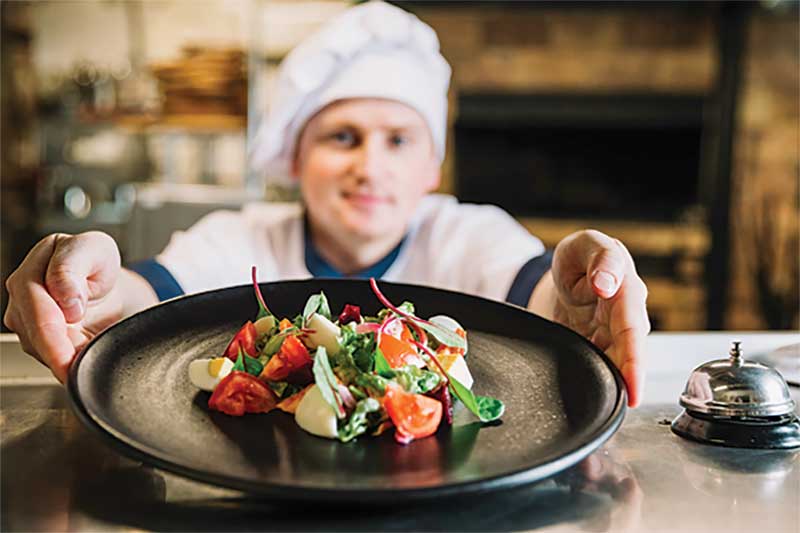
Archibald also believes simpler options can be a plus. “Return to comfort,” he says. “Comfort foods will always take center stage, providing a sense of nostalgia and familiarity as a respite from the fast-paced world.” Keomaniboth agrees, adding, “In the South, you clearly see it with certain staples, like mac ‘n’ cheese.”
Burgis says chicken and barbecue are also popular menu items. “Chicken was served to 165,454 people at CCC last year, as appetizers, plated meals, and buffets. Southern barbecue buffet was served to 11,700 people at more than 100 events,” he says. Additionally, Burgis agrees that coffee is not an area where planners should skimp. “As a convention center, CCC serves a lot of coffee—we served more than 14,000 gallons last year.”
Enhancing F&B through technology
Food professionals are using AI to improve food production and help planners in their daily operations. According to Food Technology magazine, AI is creating great advances in the industry, by creating more efficient farming and manufacturing, as well as improving transportation of food to retailers and eateries. “The integration of AI in event planning is increasing steadily and is poised to become even more prevalent in the industry,” Burgis says.
While AI has been heavily used in various aspects of event management, its application in F&B is also gaining traction. As Burgis explains, AI can assist planners in anticipating guest preferences, facilitating menu selection, and ensuring attendee satisfaction. “By analyzing data and trends, AI systems can provide valuable insights into preferred menu items, dietary restrictions, and culinary trends,” he says. “These elements help planners create tailored menus that resonate with attendees.”
Burgis also notes AI’s ability to predict attendee turnout and provide accurate attendee guarantee numbers for events. “By leveraging historical data and real-time analytics, AI systems can offer reliable estimates, enabling planners to optimize food and beverage quantities, minimize waste, and enhance cost-effectiveness,” he says. “However, it is essential to emphasize that the effectiveness of AI tools relies heavily on the quality and accuracy of the data entered in the system. Relevant, reliable data is crucial for maximizing the success of AI-driven solutions in F&B planning for events.”
Leslie G. Sarasin, president and CEO of FMI, The Food Industry Association (FMI), recognizes the possibilities of AI technology in the food industry, much as UPC barcode scanning and self-serve checkout technologies helped change the food industry. The food industry’s investment in technology in recent years is notable. According to Sarasin, food retailers designated an average of 1.3 percent of total sales—more than $13 billion—to technology investments in 2022. Food suppliers invested almost twice as much in technology as did food retailers, in terms of percentage of sales—2.4 percent.
“We invested years ago in our FMItech brand, which allows FMI to take technology programming on the road at our various events, including the recent FMI Midwinter Executive Conference, held in January in Marco Island, Fla.,” Sarasin adds.
As she explains, FMItech includes educational sessions, business meetings, and exhibits dedicated to e-commerce, customer experience, inventory management, automation strategies, and other timely topics. “Our popular FMItech pitch competition is a chance for food-industry executives to hear from emerging technology companies about their visionary ideas, and the winner of the competition earns the right to present their pitch on the keynote stage the following day to the entire audience. These types of experiences showcase practical applications for our audiences.”
This year’s award went to Augmodo, a technology solution for augmenting the retail workforce, using AI and wearable cameras
to improve e-commerce inventory and picking. The technology uses associate dashcams to build an almost real-time “realogram” of shelves to detect out-of-stock items, improve picker product search, and improve compliance.
“AI seems to be on the agenda for pretty much every event these days; when it comes to generative AI technology, I think the first step is to be comfortable experimenting,” Sarasin adds. At the FMI Midwinter Executive Conference, food industry professionals discussed how AI technology is contributing to the future of the food industry.
“A pervasive message at the convention was ‘seize the change,’ which played off the technology and AI imperative issues affecting the food business and supply chain,” she says. The conference set a record attendance this year, with 1,400 food retailers, suppliers, and solution providers. “The FMI Midwinter Executive Conference gave us the opportunity to reemphasize to a record number of attendees—decision-makers—the need, as we adapt and adopt new technologies, and as we grow because of those new technologies, for businesses to continue to foster human connections and promote the sanctity of food,” she says. “The food industry has embraced change over the years. It is by embracing change, especially changes offering definitive consumer benefit, that our industry grows.”