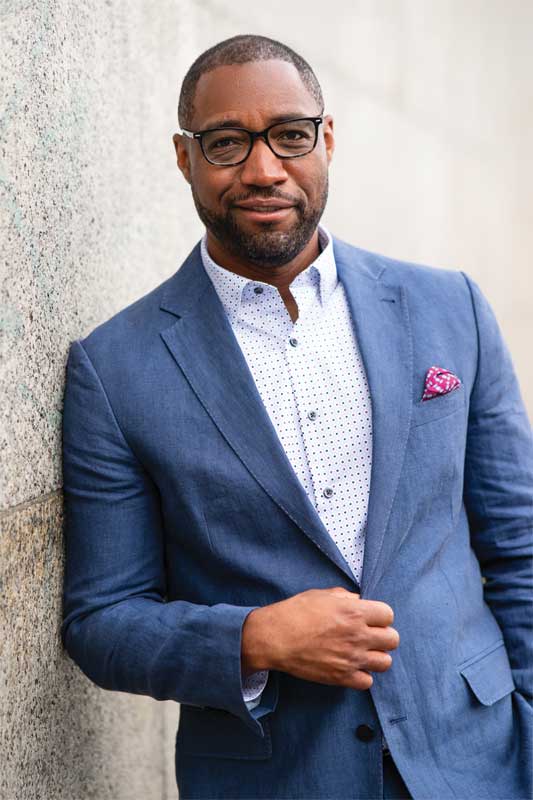
Christopher “CJ” Gross, founder and CEO of Ascension Worldwide, a Washington, D.C.-based firm focused on DEI training and consulting, talks about his new book, What’s Your Zip Code Story? Understanding and Overcoming Class Bias in the Workplace and why he thinks the hospitality industry is ahead when it comes to DEI.
Explain the concept of zip code stories.
It’s not just about where you grew up, it’s about how you grew up. The distinction between those two is important. I opened my TED Talk with a Beverly Hills zip code and how quickly the brain develops a story around those numbers.
And even in my neighborhood, people would have notions about who you would be, how smart or intelligent you are, what resources you have, what school you would go to, and potentially what type of person you are. And a lot of times, that’s not true—and it’s definitely not 100 percent true.
I’m dyslexic, and I remember a woman telling me if I had grown up in a zip code one number different, I would have had different resources than my school had and I would have received help in a different way than I had.
There are these nuances of social classes, especially minorities, who have reached a pinnacle of success in their careers. And, yes, maybe they haven’t overcome racism, sexism, and all that, but because of this concept around the zip code story, they were able to achieve success. So, I thought, in DEI, we focus on race, gender, and sexual orientation, and those are important; but I feel we don’t focus on some of these other aspects of how a person grows and develops.
How do you think the hospitality industry is doing in terms of DEI?
In hospitality, you have some unique situations going on there. Because when you look at race, gender, sexual orientation, et cetera, you will find more women in that space and you will find more minorities in that space. So even 20 to 30 years ago, you had people who could come in and didn’t have a certain level of education, but they could learn on the job and succeed. And then when you are talking on a higher level, like conferences kind of professional opportunities, it’s a unique industry, and there are a lot of opportunities for what I would call go-getters or strivers. So, because of that, I think a couple of things happen. You have an opportunity for minorities to succeed, and when you get to the very top, you run into the same problems as other corporations: How is this person going to look to our clients? Can they talk to their clients?
In hospitality, there is a lot of emotional intelligence at the top level because you always have people who want something done in a particular way, and you must have a high level of emotional intelligence to deal with those things. From what I have seen, the hospitality industry, compared to more corporate situations, has a leg up specifically because of that reason.
I’ve seen people, who in my mind, I don’t see as management in corporate America, but I see them as management in hospitality; and they come from different backgrounds, they speak different languages. And sometimes, that’s an advantage. Because when you are talking about hotels, international destinations, you have different cultures coming in, and it benefits you to be diverse and have a diverse staff. So, the benefit is greater to adopt diversity concepts in that particular industry. Therefore, that’s why I think they are a little further along.
How can people recognize and overcome their own unconscious bias?
I would want them to assess their zip code story and how does that story impact their job, their experience, their ability to be good leaders, and what we call ‘career mobility.’ So, if you have someone who is a leader in a company and they are trying to figure out how to influence more people in the company or how to increase the social brand, you’re really looking at three things:
Are you associating yourself with different people just not at work, but who do you invite to your house for dinner? Are you constantly exposing yourself to people who are different from you and building an intimate relationship with them so you can be more diverse?
Are you engaging in activities that would expand your knowledge of different cultures? For example, I live in rural Pennsylvania, but I didn’t grow up here. So, one of the things I told myself I would do is drive a combine. And the reason why is when I go work with those in sustainability and farmers, it gives me better relationships with them. … you understand them better when you have the same experiences they did.
Thirdly, I would tell the reader to expose themselves to different cultures by traveling and being around different geographical areas. For me, I would attend a mosque, and when I notice someone who is Muslim in the corporate world, I would say to them I have this experience to [try to] better understand their plights, their pains, and some of the social challenges that people have.
That’s how you expand your zip code story.