Relationships are especially important in the meetings and events industry. It takes a village to plan and host a successful meeting or conference, and it all starts with the relationship between the planner and the CVB. “It is like buying a car. You do not just go out and buy one; you research it first,” says Heather Herrig, president and chief event strategist at Every. Last. Detail. in Atlanta.
“A planner cannot effectively plan an event in a destination that is not their own without putting a lot of foundational work into it, and the real beauty is that it is all in one place: the CVB,” she says. “You can save a lot of time just by calling the CVB. The conversation should be ongoing, but it does not take a lot of time or effort to do that.”
Establish expertise
Planners who have never worked with a CVB may not be aware of all the services and assistance they offer in event planning. “Some planners do not understand how to leverage the relationship with a CVB because they do not know what it is, what it does, or why it should be an initial stop in the planning process,” Herrig says. “CVBs have changed so much—beyond being just a place to pick up a pamphlet on a town—and they continue to evolve.”
Destination teams play a part in building relationships with planners, by demonstrating themselves as the local expert. “Establishing yourself as the unbiased local expert certainly helps build a relationship with planners,” says Jeff Hewitt, executive vice president of sales and service for Visit Savannah. “We have to show that we see the big picture and can be the glue that holds it all together.”
This has not always been easy for CVBs since the pandemic. From senior-level executives retiring and budget cuts requiring layoffs to others leaving the industry during the turmoil caused by COVID, the rotation of CVB employees has created a gap in relationships. “The first CVB that I worked with post-COVID changed my contact three times due to turnover,” says Alicia Crupi, event specialist at Paragon Events. “While this was not the most ideal situation, the end contact provided the wonderful experience I had hoped for.”
In addition to the rotation of CVB contacts, staffing changes have impacted the level of knowledge and experience of CVB staff as senior members have left. That issue has not plagued CVBs alone—it has carried over into other industry partners as well, notes Kelly Cavers, chief sales officer at The Palm Beaches, the destination marketing organization for Palm Beach County, Fla. To combat the problem, Cavers says The Palm Beaches implemented a certified tourism ambassador program.
“With so many retiring and the influx of new people coming into these positions, we felt that we had to do a better job of educating all frontline staff members so they better understand the destination and can be the experts. It is important to us that our frontline workers understand the history of our area and how they can share with planners or even attendees to make their experience more enjoyable. It is an initiative we have taken on this year that we are really excited about.”
While planners have an expectation that the CVB is the local expert with all of the insider information about their destination, most planners are understanding of the situation many CVBs have faced over the last few years. “I do not expect them to know all the ins and outs of the city, as long as they are open and honest about it,” says Tracey Bockhop, CEO of Meet Meetings. “If they acknowledge that they don’t know and tell me they need to check on something, that is okay. In fact, it shows they care and are willing to put in extra effort to answer our questions.”
Communication is key
The cornerstone for building any relationship is communication, and the same holds between planners and CVBs. “Effective communication is so important, from the moment planners meet the CVB contact all the way through to the end of the event,” Crupi says.
Communication should extend beyond event details, Bockhop adds. It starts with getting to know one another on a personal level. “I want to feel like a valued customer. I like the personal touches, extra reach-outs, and efforts to actually talk,” she says. “So often the interactions are transactional. I wish there was more of a relationship—and that starts by taking the time to communicate.”
Cavers believes the lack of communication comes from the fast-paced environment the industry has returned to post-pandemic. “With technology, you have the ease of sending something via email and communicating without having actual dialogue,” she notes. “But dialogue is important because it helps you understand what the end goal is for the planner.”
Patricia Byrd, director of destination services for OneSpartanburg, Inc. echoes the importance of communication, noting how it all starts by getting to know the client. “To establish a relationship, it is important to get to know the client as a person, as opposed to just a client,” she says. “Know the little things about your client, whether it’s their birthday or the name of their child or pet. I admired a co-worker for being so intentional about it and for remembering those small details. The time and effort you put into that is important.”
To create strong lines of communication with her CVB contacts, Crupi tries to have face-to-face communication early in the relationship, which can easily be done via Zoom or another video-conferencing application. “[On the call], you can outline your expectations or event needs, as well as learn about the CVB’s experience and any exciting preliminary details they would like to share about their destination,” she says. “From there, prior to the event, I take the opportunity to meet for dinner, typically at a restaurant or location the CVB suggested for the event. I am building an even stronger relationship with that CVB and also ensuring the location that I am considering for my attendees is a good fit.”
As Byrd stresses, an important element of communication is listening, which helps a CVB truly forge a positive connection with a planner. “You can learn so much about a client when you simply listen,” she says. “And that’s the goal: to learn as much as possible about the client and the client’s needs. The more you listen, the more you understand; the relationship starts to grow—and you have a trusting relationship, not just a client.”
Communication in today’s post-pandemic world is not the same as it once was, according to John Solis, senior vice president of sales and client services for Visit Houston. With more people working from home and with more varied hours, it can be difficult to nail down opportunities to communicate. Solis feels CVBs must put in extra effort to communicate with planners. “It is on us to figure out what their work schedules are and how they prefer to communicate, and then we work around that,” Solis says. “It used to be that we would send a gift package to their office prior to a planning session, but we are finding that many people are not even in the office to receive something like that. One of the first things we ask now is how they want us to communicate. We want planners to be in their comfort zone, so we strive to communicate with them in a way that works for them, so that we can best work together.
Transparency matters
In building open communication, CVBs also have a need from planners: that transparent information is shared at the beginning of the process. “It is our goal to match what they are looking for, but we need to know those needs upfront,” says Chad Culver, senior director of sports commission and convention sales for Visit Knoxville. “If planners are thorough and transparent with the RFP, it helps us determine if we are a fit and also helps build the relationship.”
Understandably, a planner may not have all of the relevant details initially; but, as Byrd explains, it is important that the planner share all of the details with the CVB as early in the process as possible. This helps the CVB meet the needs of both the planner and local partners. “The more we know, the better we can put together a proposal that connects the planner with the right venue or hotel at the beginning, rather than having to go back and do a reset,” Byrd says.
Planners also appreciate transparency, especially regarding membership. As Tracy Stuckrath, founder of thrive! meetings & events, says, “If a CVB is member-oriented, they need to be upfront with the fact that they are promoting their members. Planners need to know if they aren’t necessarily getting a full perspective on options available in the city and, instead, are just being given members of the CVB.”
Share instead of sell
Attending industry events and meeting new contacts is a great way to cultivate relationships and create positive impressions that lead to longstanding relationships, for both CVBs and planners. “You cannot go into an event thinking that you do not need to meet with CVBs or do not need to sit with them at lunch because you will never go there,” Herrig says. “As much as you can, have those conversations as a matter of best practice toward building relationships. If an event comes up for that city, you will be ahead of the game by already having a relationship at that destination.”
Likewise, Herrig says destination teams must encourage relationships and share information that will stick with the planner—not immediately give their sales pitch. “In these scenarios, talking points are not what I am looking for. I am not coming in with an RFP. I just want to get to know you. Approach it more like a first date than a sales pitch. Let me get to know you and you get to know me. If from the very start you are just giving me sales points, I am not going to remember it at all.”
When CVBS go beyond their basic sales pitch and talk about the details that make their destination special and a great fit for a group, planners take note and want to continue the conversation to learn more. “I can go to any destination in America and probably find a hotel that would have what I need,” Herrig says, “But it’s not solely about that. There is so much more about the destination that is important, because we want to provide an experience for attendees. A city has space; great. What would be powerful to hear from a CVB and would encourage me to pursue a relationship would be what makes the destination unique.”
CVBs continue to implement new ideas for sharing how their destinations are unique and are suited to a group’s needs. In addition to inviting planners to experience the destination firsthand and to attending trade shows and events, CVBs can engage local partners as well. The Palm Beaches, for example, is working to increase face-to-face engagements with planners and local partners to educate and inspire planners. Cavers recalls The Palm Beaches CVB bringing the owner of a local charcuterie company to an industry event. “Planners might wonder what that has to do with planning a meeting here, but it was inspiring to hear him share his background in the meetings and events industry, how he started his business, his sustainability efforts, and how all of it can be incorporated into a meeting,” Cavers says. “We try to bring our local community and thought leaders to inspire planners and share with them what happens here. It gives planners a feel for our community and often leaves them wanting to know more.”
Sweat the small stuff
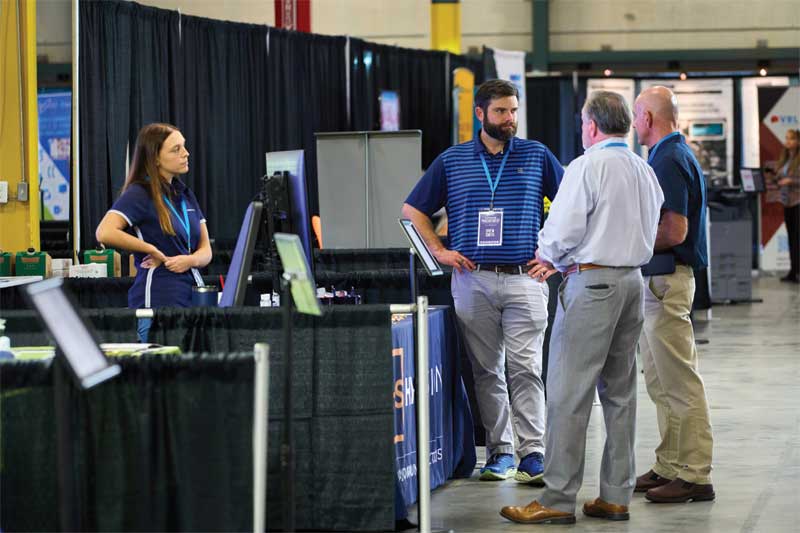
Like in all relationships, little things matter in the planner-CVB relationship. Even little things—such as dropping by the event—can go a long way toward solidifying the relationship, Buckhop says. “You will remember the effort the CVB made to stop by and say thank you, whether for two minutes or 10 minutes.
Saying thanks, in person or over the phone, goes so much further than sending us an email. Those sorts of efforts help the relationship grow organically.”
The small efforts can also include the CVB finding ways to give a group a little something extra, such as providing gift bags or publicly welcoming the group to town. Byrd and her team have done both for visiting groups, and, while both were easy for the CVB to do, she says they went a long way in building a solid foundation with planners. “Unexpected tokens of appreciation make anyone feel special.
I find that the planners I work with are always appreciative of the little things. On our end, it is fun to provide them and see the smile
they bring.”
Be open to feedback
A good relationship sometimes means both sides sharing areas for improvement and missed opportunities. After each event, Byrd and her team at OneSpartanburg, Inc. make the effort to follow up with planners to hear firsthand what went well and what they or one of their partners could do better in the future. “We want to evolve and do better, which plays significantly into creating better relationships with our planners and events,” she says. “We want planners to know their event is not just a transaction with us; it is relational. Asking what we can do better is an opportunity to build upon the relationship.”