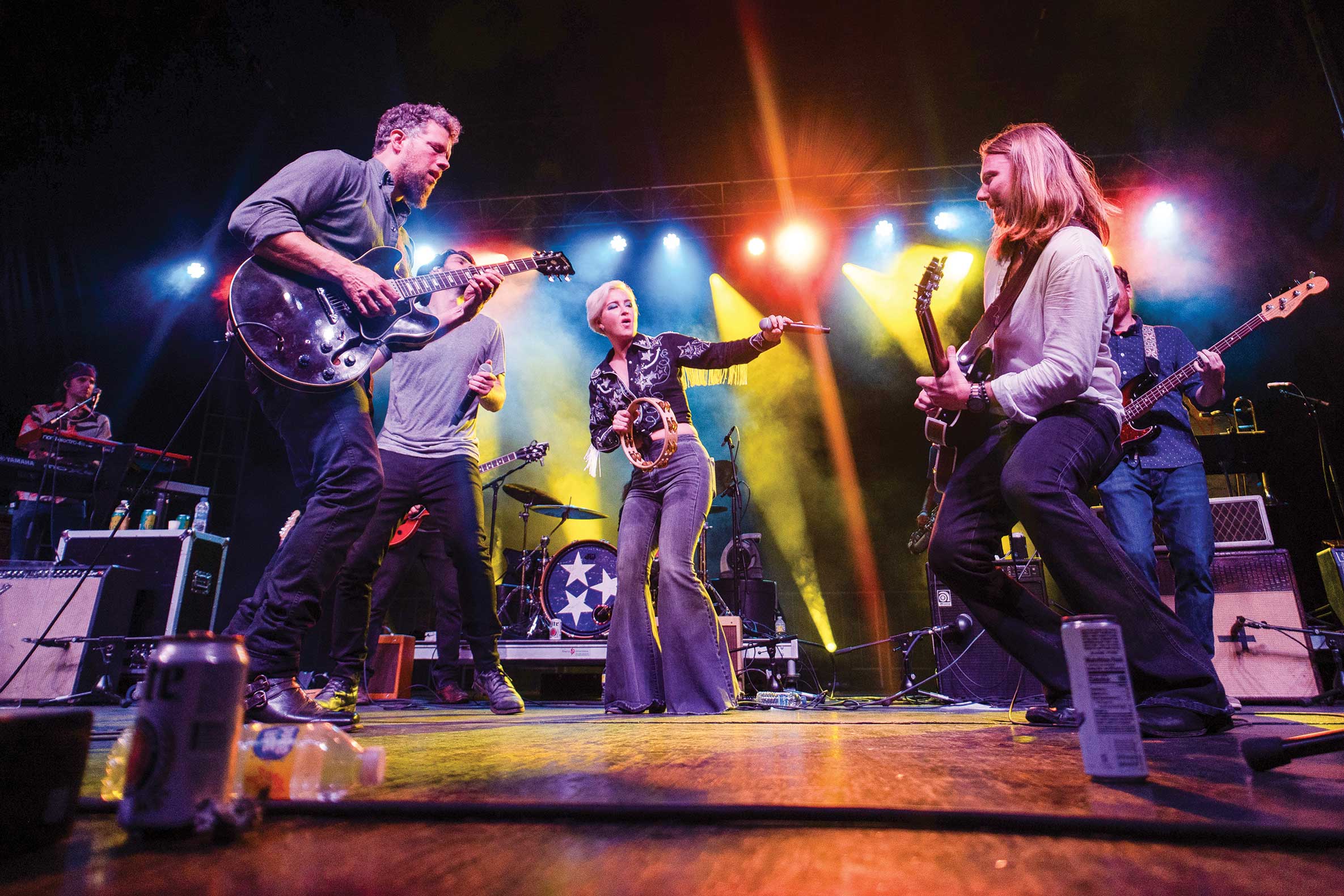
No matter where you go across the South, music is part of the fabric that brings the culture to life and ties the communities together, no matter the sound. There’s bluegrass and old-time music emanating from Appalachia, blues from the Mississippi Delta, soul from Memphis, jazz from New Orleans, gospel from across the Bible Belt, country from virtually everywhere, and so much more.
The South’s songwriting and hit-making history is also of interest to planners looking to elevate meetings with a touch of entertainment that plays into the local setting. Check out how these five Southern cities are striking a chord with meeting and event groups.
Savannah, Ga.
Savannah boasts a rich musical lineage, including Moon River writer Johnny Mercer, country star Megan Moroney, hip-hop icon Big Boi, jazz saxophonist James Moody, blues musician Victor Wainwright, and all-star producer Dave Cobb. It’s also home to plenty of gospel music, buoyed by the First African Baptist Church—a National Historic Landmark dating to 1773, considered the oldest continuously operating African American congregation in North America.
All of these musical styles and others converge at long-held events like the Savannah Music Festival, which began in 1989 and now draws close to 20,000 attendees annually across venues ranging from the 86,000-square-foot Lucas Theatre for the Arts to the 3,600-square-foot Trustee’s Garden and small churches like Trinity United.
“Music is woven into Savannah’s culture, and that authenticity resonates with meeting attendees seeking experiences beyond the meeting room,” says Kellie Linder, vice president of sales and services for Visit Savannah. “The city has deep musical roots, with connections to renowned artists, a thriving local music scene, and an appreciation for a wide range of musical genres. Planners often incorporate local musicians into receptions, dinners, and special events, giving attendees a uniquely Savannah experience while supporting local talent.”
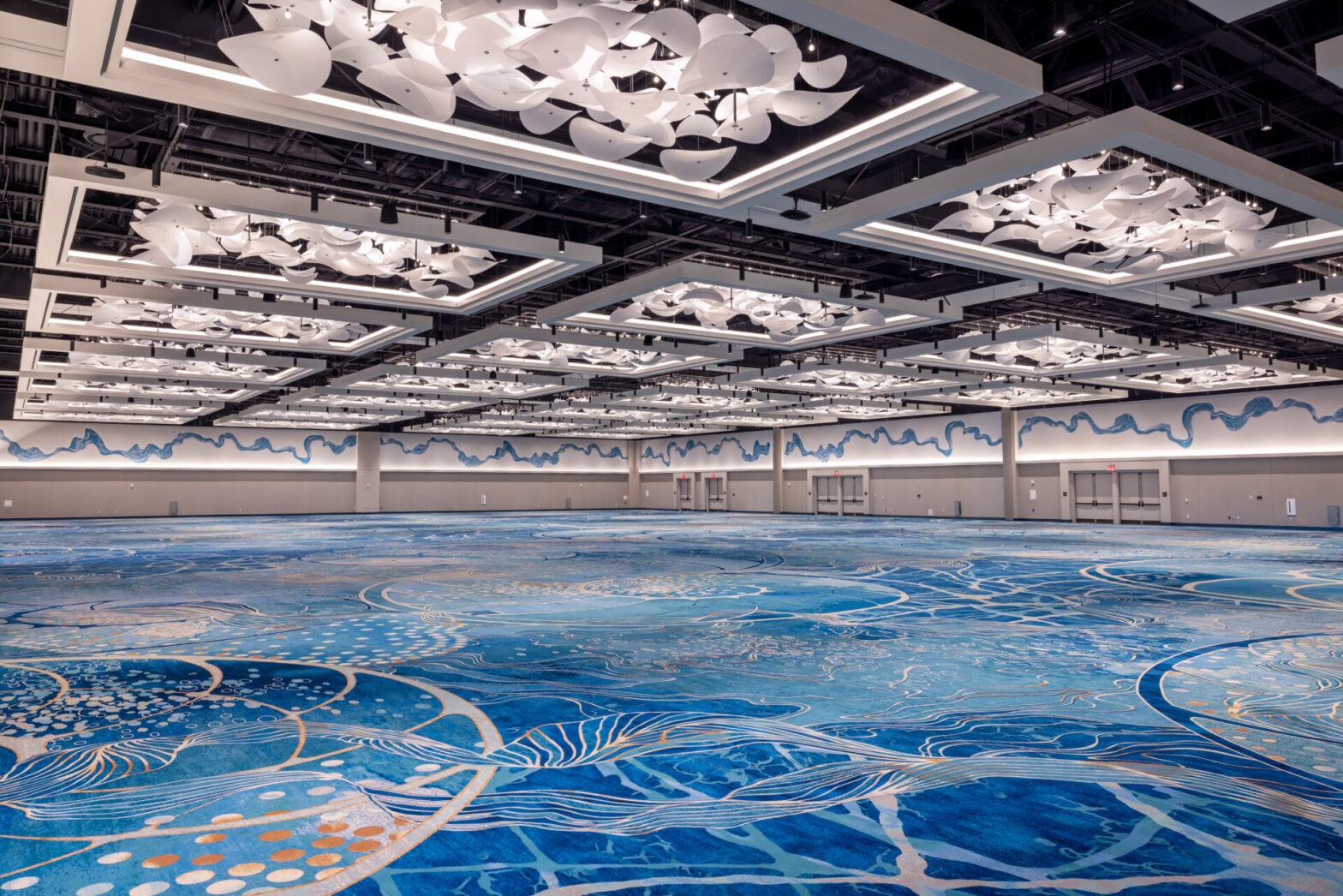
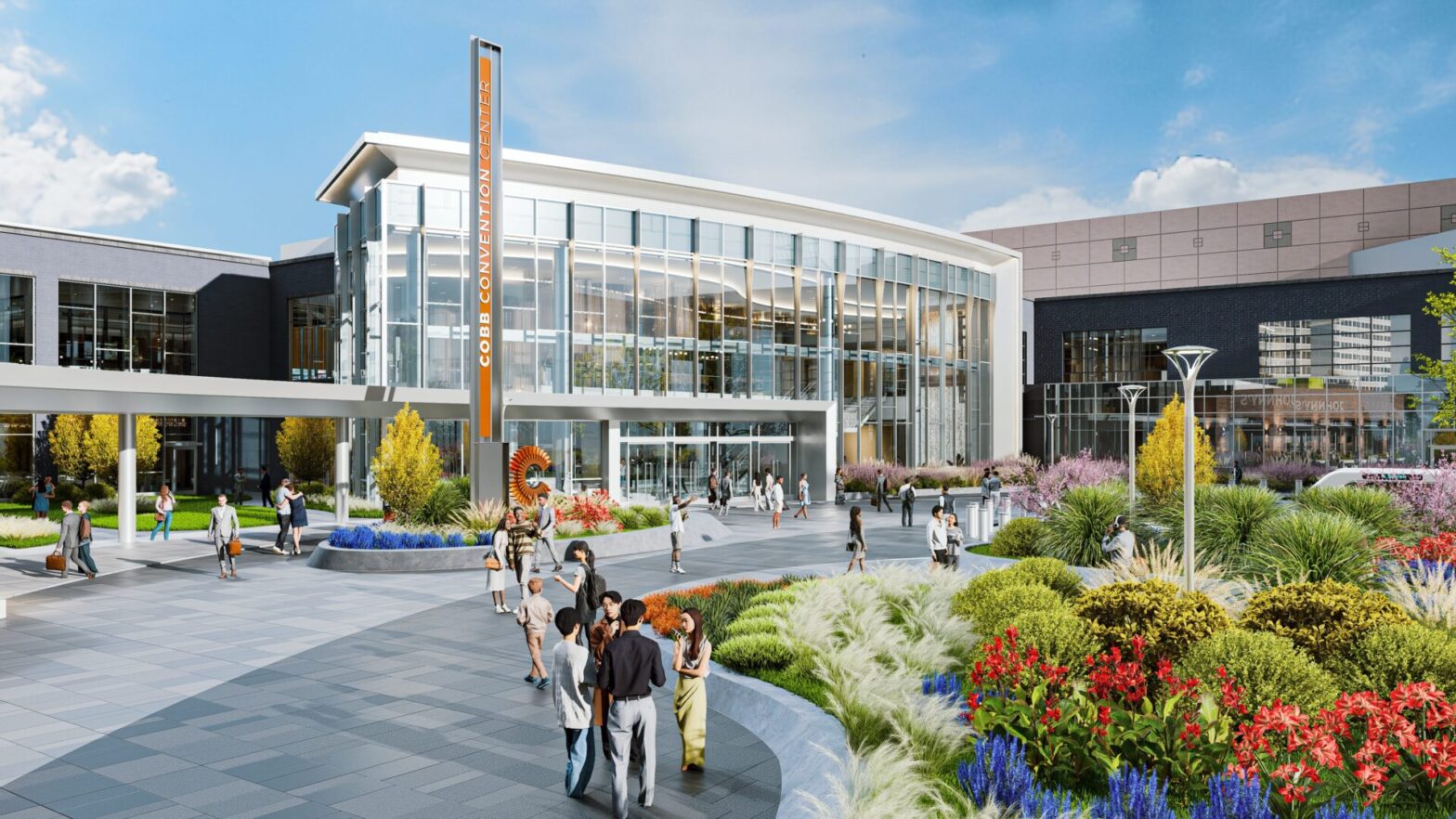
Meeting venues include Savannah Convention Center, which was expanded last year and now boasts 660,000 square feet of premier event space, including a 200,000-square-foot exhibit hall and a 40,000-square-foot ballroom. According to Linder, popular hotel venues include JW Marriott Plant Riverside District, with 10,500 square feet of event space, and Thompson by Hyatt, with 8,200 square feet of event space.
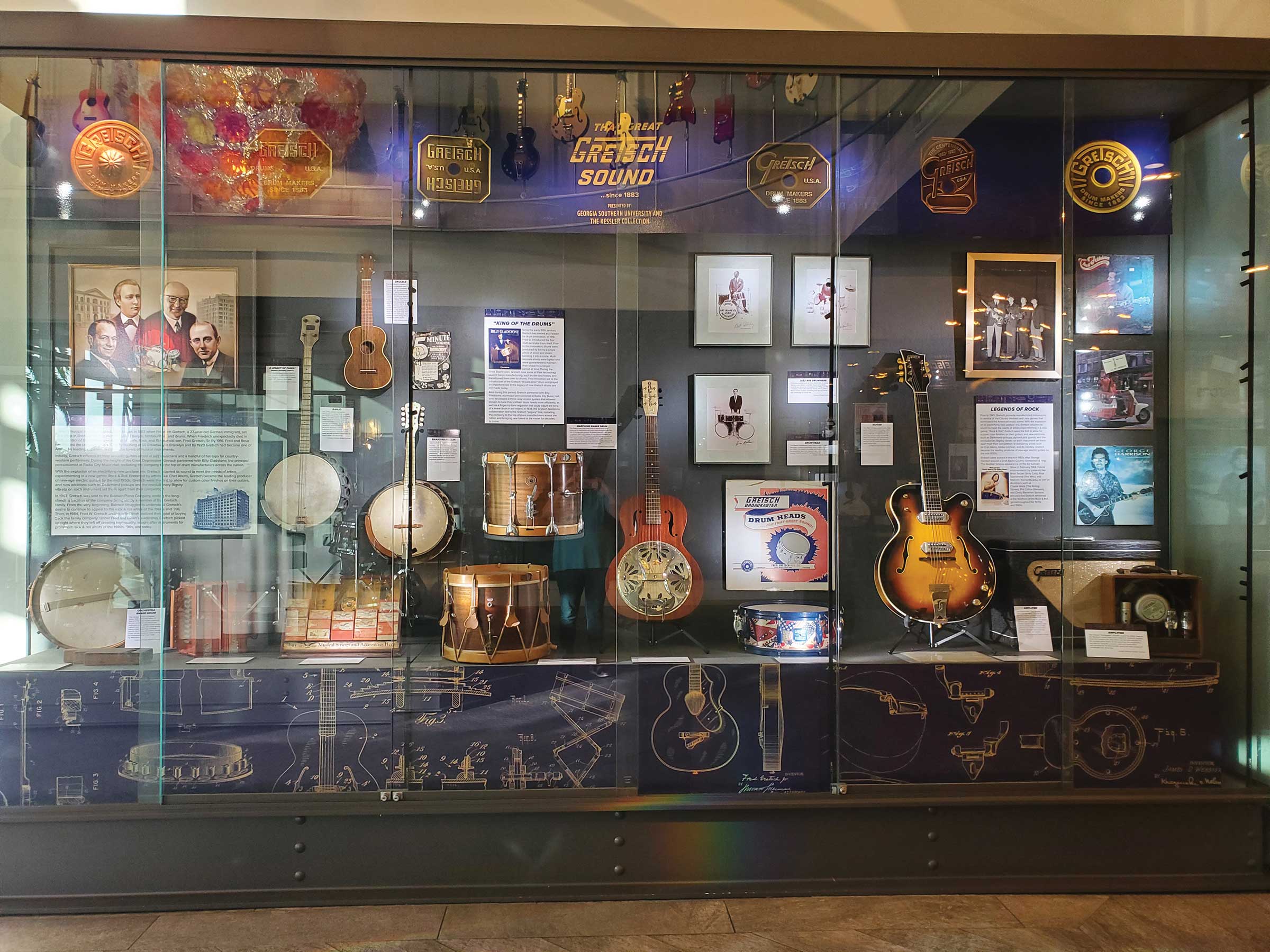
On the main level of the building housing the JW Marriott Plant Riverside District hotel is an impressive Gretsch guitar exhibit, presented in collaboration between the Fred and Dinah Gretsch School of Music at Georgia Southern University and The Kessler Collection. Just beyond the Gretsch exhibit are District Live, a live-music venue, and District Live Studios. District Live is available for private events, corporate functions, weddings, and other group bookings.
“At Plant Riverside District, the That Great Gretsch Sound! exhibit celebrates the legacy of the iconic Gretsch family and their influence on the music industry, providing a distinctive backdrop for receptions, networking functions, and themed events,” Linder says. “Planners often use the exhibit as a conversation starter and an immersive experience that gives attendees a taste of Savannah’s musical heritage. District Live has also become a popular venue for corporate events, private concerts, receptions, and general sessions. Its state-of-the-art sound, lighting, and production capabilities allow planners to create memorable experiences, ranging from keynote presentations to live-entertainment showcases. Whether attendees are enjoying a private performance or gathering for an evening event, District Live adds an energetic atmosphere that elevates the overall meeting experience.”
Linder adds, “Music is part of Savannah’s identity, and meeting planners are increasingly looking for destinations that offer authentic experiences outside the meeting room. From the interactive Gretsch exhibit and live performances at District Live to our talented local musicians, renowned Savannah Music Festival, and vibrant live-music venues throughout the city, Savannah gives attendees memorable experiences that blend business and culture. These unique musical touches help create stronger attendee engagement and leave a lasting impression long after a meeting concludes.”
Lexington, Ky.
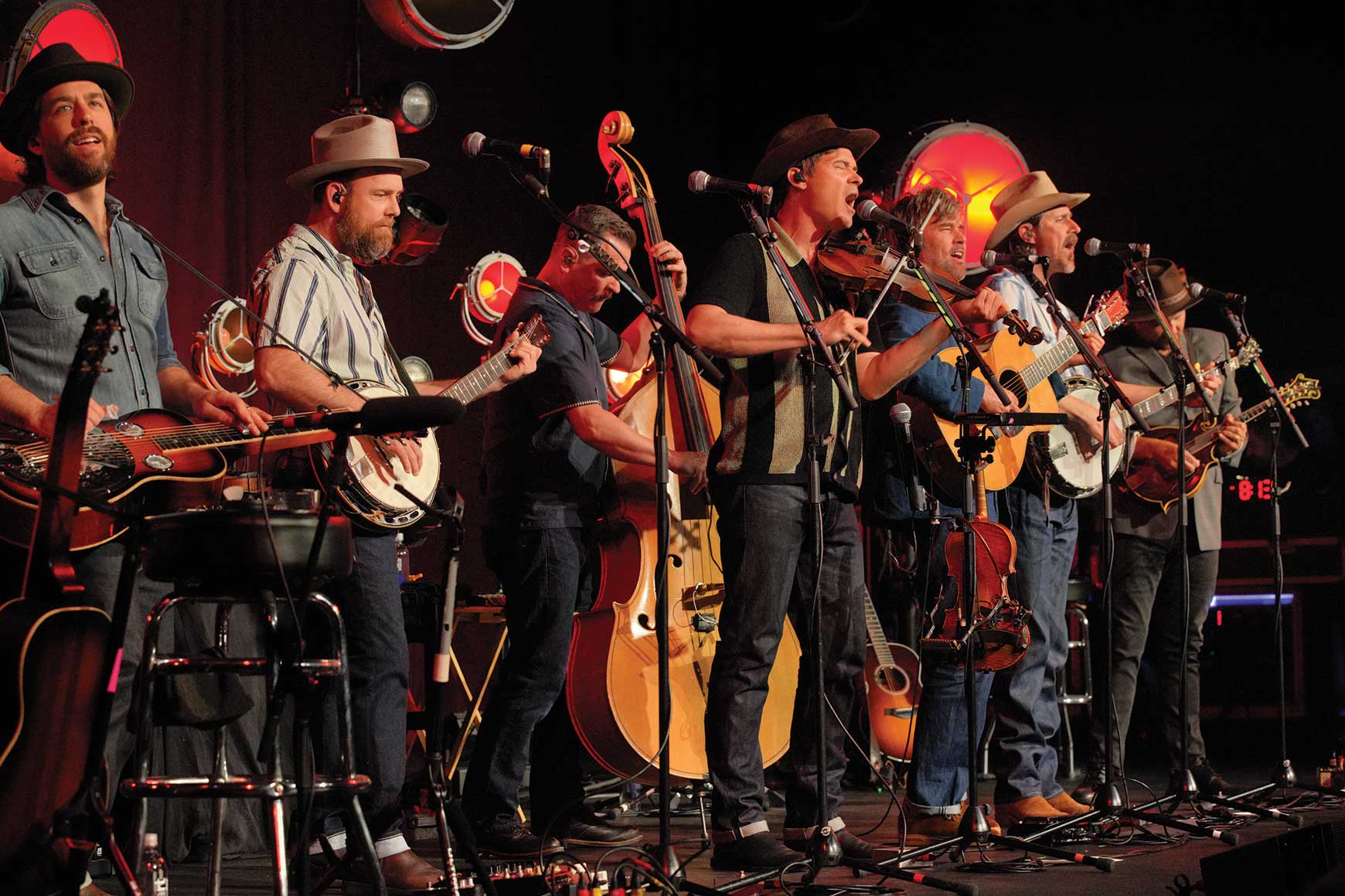
Although its most common exports are fast horses, strong bourbon, and championship basketball, music is also a prominent draw in the central Kentucky city—and it’s far more than just bluegrass. Yes, Lexington does claim trailblazing banjo player J.D. Crowe, but other notable artists with Lexington roots and other ties include country singers Tyler Childers, Chris Stapleton, and Sturgill Simpson, along with The Backstreet Boys’ Kevin Richardson, blues icon Tee Dee Young, Television guitarist Richard Hell, and Christian singer Anne Wilson.
“We’re in the middle of bluegrass country, so that heritage runs deep throughout the region,” says Mary Quinn Ramer, president of VisitLex. “There’s so much more beyond bluegrass that adds to the vibrancy of the music culture that exists here today.”
With so much home-grown talent, there’s no shortage of places for artists to play. Similarly, Lexington offers an abundance of meeting venues, from the 20,000-plus-seat Rupp Arena and the conjoined Central Bank Center, with more than 100,000 square feet of space, to more intimate venues like the Lyric Theatre, Singletary Center for the Arts, and Lexington Opera House.
According to Ramer, conventions and other meetings regularly incorporate music into their plans to amplify their message. This month, the Kentucky Travel Industry Association will host a kick-off party at Manchester Music Hall. “We’ve also seen convention groups come in and do a takeover at The Burl, where they can enjoy that music element and also take advantage of the property’s other elements, like its brewery and arcade,” she says. “We’ve also seen corporate events with music pop up at places like the Kentucky Horse Park’s Alltech Arena and Rolex Stadium, along with other engagements at nearby distilleries that are aimed at tying all the core pillars of the city’s tourism together.”
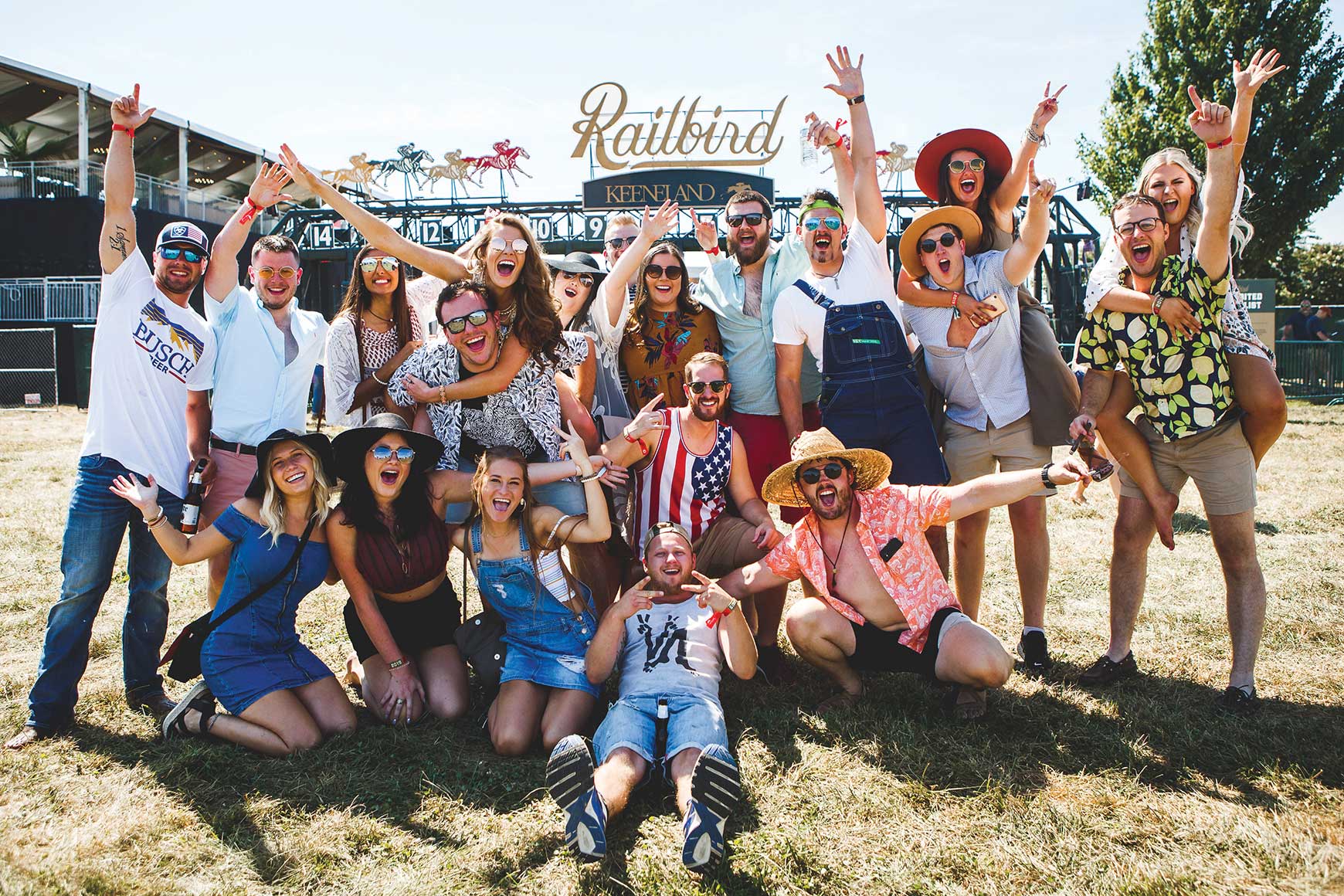
With marquee events like Railbird Festival, which draws nearly 100,000 music lovers to town every spring, along with the recently opened Gatton Park and the upcoming Turner Commons—a district west of downtown that will include restaurants, a bourbon distillery, and The Rail, a 2,200-person-capacity multipurpose event space—Lexington is poised to remain a premier destination for music lovers and event planners for years to come.
“I see a nice little triangle forming between the core of downtown, the Distillery District, and Turner Commons that will make for easy navigation for both leisure and business travelers,” Ramer says. “We’re excited for
the Commons to fully open in early 2027 so we can begin leaning into and promoting it even more.”
Greenwood, Miss.
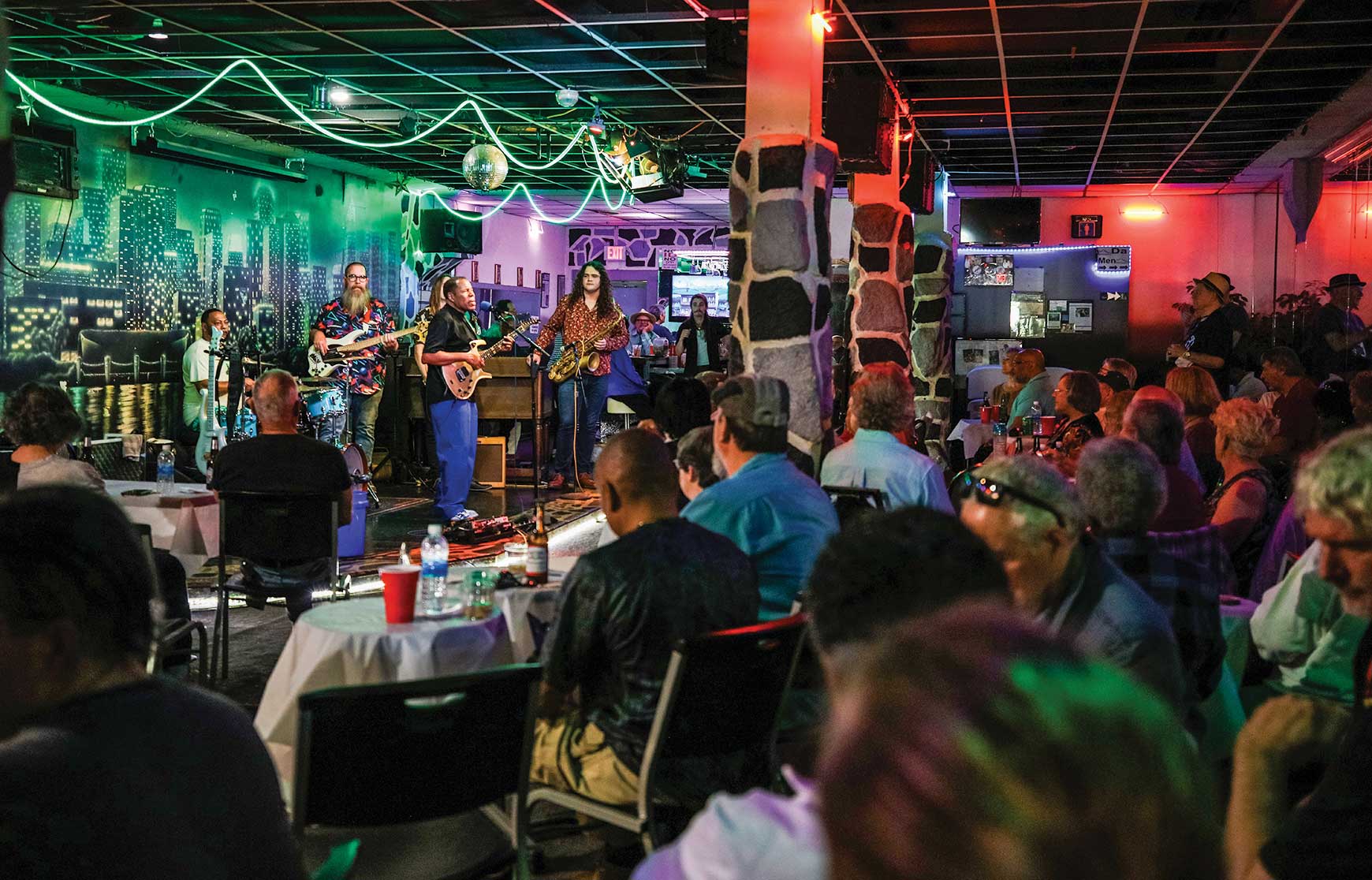
Greenwood is one of the Mississippi Delta’s most historic blues towns. With ties to names like the legendary B.B. King, who was born just up the road in Berclair and played some of his first radio gigs in town on WGRM in the mid-1940s, along with the mysterious Robert Johnson, early blues guitarist Walter “Furry” Lewis, and longtime Howlin’ Wolf guitarist Hubert Sumlin, Greenwood is an epicenter for blues music.
On top of its blues heritage, Greenwood is also home to country singer Bobbie Gentry, best known for her hit song, Ode To Billie Joe. The town’s role in the Civil Rights Movement—where Emmitt Till allegedly whistled at a white woman prior to being lynched in 1955 and activist Fanny Lou Hamer was nearly beaten to death after being arrested while on a bus trip back to Greenwood in 1963—and the protest music that rang out in Civil Rights marches also contributed to its storied music legacy.
While much of the region’s music history is chronicled at the Greenwood Museum of the Mississippi Delta, some mystery remains. Scott Barretta, a sociology professor at the University of Mississippi and local music advocate, hopes a new museum display, expected to open next year, will illustrate how history and mystery have intertwined. “The uncertainty behind Johnson’s death and some of the other music landmarks here mean visitors have to use their imaginations a bit, which only helps Greenwood to stand out in the delta,” Barretta says.
Despite its small scope, Greenwood still offers numerous venues suitable for hosting events. Leflore County Civic Center features more than 13,000 square feet of event space, while the boutique Alluvian Hotel offers various spaces for corporate groups, retreats, seminars, meetings, and social gatherings. Both venues regularly feature live-music shows as well. Other local venues include Tallahatchee Flats (a collection of rentable tenant houses near Johnson’s gravesite) and private homes through the Hush Puppy Music Coop (co-founded by Barretta).
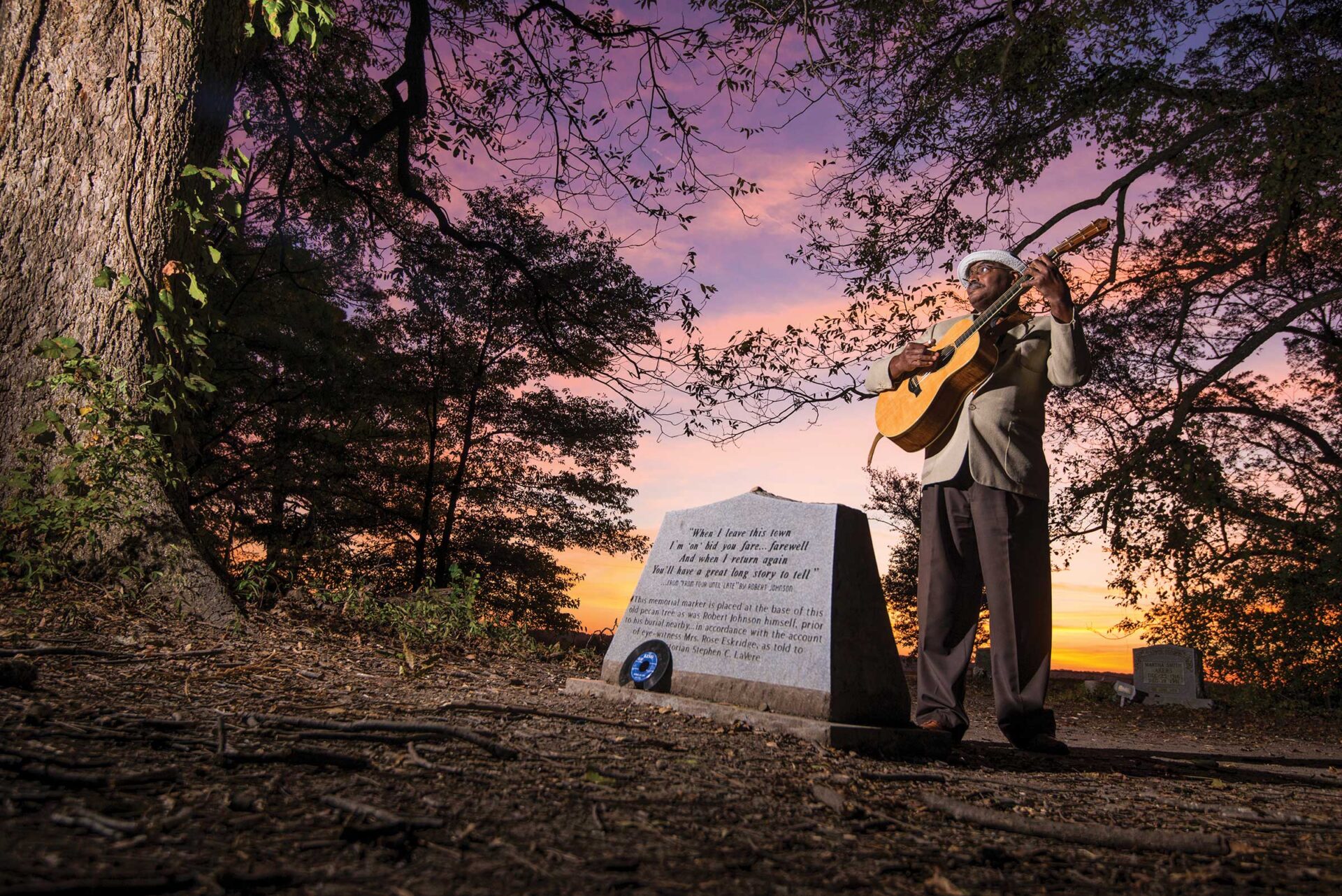
Visitors can explore Greenwood and Leflore County’s music heritage at several Mississippi Blues Trail markers. “When I tell people about Greenwood and the Mississippi Blues Trail markers, they add these sites to their itineraries, whether it’s individuals or tour buses,” says Ashley Farmer, executive director of the Greenwood Convention and Visitors Bureau. In addition to Johnson’s gravesite, blues marker sites include the building that housed the WGRM radio station, where B.B. King first performed live in 1944, and the Elk’s Lodge, where Ike Turner and other famous singers performed.
“People from around the world travel through Greenwood to tour these sites and seek out a little music along the way,” Farmer says. “It is common to see a lone guitarist playing and singing to Johnson’s grave, with the Delta sunset in the background. It’s a beautiful thing to see.”
Spartanburg, S.C.
Located in South Carolina’s Upstate, Spartanburg was the launching ground for the Marshall Tucker Band and the longtime home of Lynyrd Skynyrd drummer Artimus Pyle. Spartanburg’s music heritage goes beyond Southern rock, having also served as the launchpad for songwriter Marshall Chapman, whose songs have been recorded by Conway Twitty, Jimmy Buffett, Emmylou Harris, Wynonna, and Sawyer Brown; gothic blues singer Adia Victoria; and gospel singer Ira Tucker (The Dixie Hummingbirds). Much of this history can be explored on the Spartanburg Music Trail, a 30-minute self-guided walking tour presented by the Spartanburg Philharmonic.
“The Marshall Tucker Band is who we’re most often associated with, but Spartanburg actually has a strong music history dating back nearly two centuries, much of which visitors can learn about on the Spartanburg Music Trail,” says Patricia Byrd, director of group sales and services for OneSpartanburgInc. “There’s info on The Marshall Tucker Band, along with Pinkney ‘Pink’ Anderson, the Spartanburg bluesman who influenced Pink Floyd; Spartanburg native Don Reno, who collaborated with Arthur Smith on the instrumental Dueling Banjos bluegrass classic; and much more. It’s a great way for visitors in town to experience Spartanburg and connect our past with the present.”
Rigsby’s Classic Rock Café, a restaurant and entertainment venue, regularly hosts live acts and features music artifacts from the Beatles, Joan Jett, and AC/DC. It includes a 40-seat private dining room and is available for full buyouts. In addition to Rigsby’s Classic Rock Café, Spartanburg Memorial Auditorium seats 3,000 people in The Theatre and can accommodate 1,800 in The Hall, a general admission venue. Since opening in 1951, the historic venue has presented shows from the late Ray Charles, Billy Joel, The Black Crowes, Dave Matthews, and Taylor Swift. Its newest space, The Alcove, is a versatile meeting venue and lounge, offering a blank slate for a wide range of events, from seminars and fundraisers to dynamic meetings and teambuilding activities.
“Spartanburg’s rich music heritage offers meeting planners a variety of opportunities to incorporate the city’s culture and story into their programs,” Byrd says. For example, groups can enhance receptions and special events with live performances by local musicians, incorporate music-inspired elements into décor and programming, and include music-focused experiences in the itinerary. Planners can also arrange visits to cultural attractions and museums highlighting Spartanburg’s musical history, or host gatherings at local music and entertainment venues like Rigsby’s Classic Rock Café, The Fr8yard, and Fretwell.
“Spartanburg’s music story is an important part of what makes Spartanburg so distinctive,” Byrd says. “From the artists and venues that continue to shape our music scene today to the people and places that preserve our musical heritage, music provides meeting planners with another authentic way to connect their attendees with our community. Combined with our walkable downtown, diverse venues, welcoming hospitality, and growing hotel inventory, Spartanburg offers groups the opportunity to create meetings and events that are not only productive, but truly memorable.”
Knoxville, Tenn.
While Knoxville is famously associated with the Osborne Brothers’ hit, Rocky Top, which serves as the University of Tennessee’s fight song and one of the state’s official songs, the city’s music history runs much deeper. Knoxville also lays claim to country stars Morgan Wallen, Kelsey Ballerini, Kenny Chesney, Ashley Monroe, and Emily Ann Roberts.
“We like to say that country music was born here in east Tennessee, then we handed it to Nashville to grow up, and it became the ‘Music City,’” says Kim Bumpas, president of Visit Knoxville. “Our musical history is rich, running from Appalachian and old-time bluegrass to country, blues, jazz, rock, and Americana.”
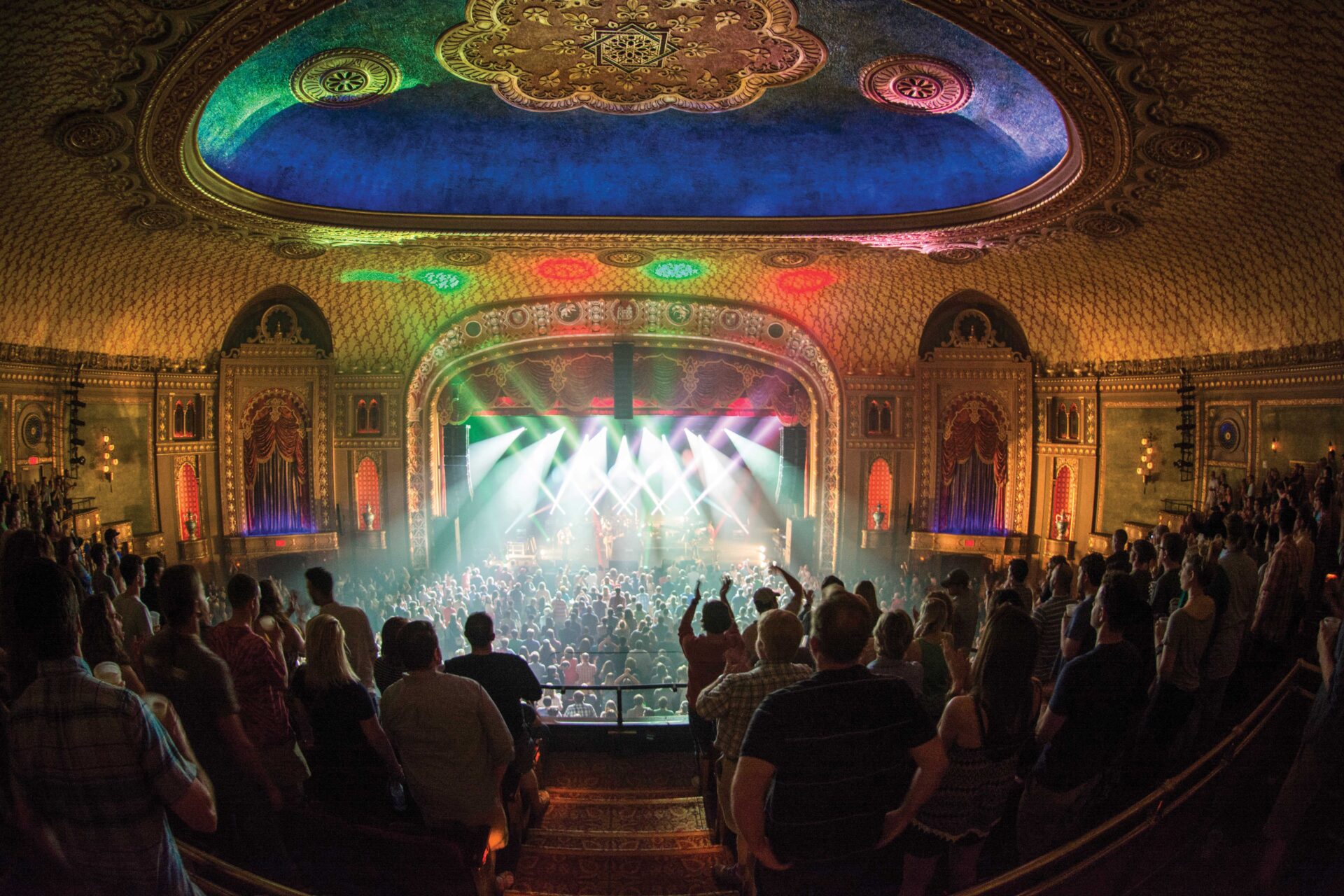
Knoxville is also the home of the Southern Skies Festival (which was paused this year after coming online in 2021) and Big Ears Festival, an eclectic, SXSW-like decentralized festival held in April. Since launching in 2009, the festival has expanded to more than 20 local venues, including the historic Bijou and Tennessee theatres, Knoxville Civic Auditorium & Coliseum, and Boyd’s Jig and Reel, drawing an average attendance of 10,000-15,000 visitors annually. Both the Bijou and Tennessee theatres are available for private event rentals.
In addition to the music performances at Big Ears Festival, Knoxville hosts Blue Plate Special, a free lunchtime concert series held inside Visit Knoxville’s downtown office. The show launched in 2004, broadcasting at noon daily (excluding Fridays and Sundays) from local radio station WDVX. It has welcomed artists like Chris Stapleton (with The SteelDrivers), Blackberry Smoke, The Avett Brothers, and Rodney Crowell.
When not used for sporting events, Thompson-Boling Arena at the Food City Center and Neyland Stadium host concerts and other events. The 500,000-square-foot Knoxville Convention Center and its companion Knoxville Civic Auditorium & Coliseum host various meetings, conventions, hockey matches, concerts, and more. Other must-see music attractions include the Dolly Parton mural in downtown Knoxville, where the late “Queen of Country” gave some of her first public performances; the Museum of Appalachia, in nearby Norris; and the East Tennessee History Center.
“I see a lot of individuals and event planners locally really leaning into singer-songwriters and using them to highlight their gatherings,” Bumpas says. “But at the same time, there are also groups bringing in talent like bluegrass bands and legacy acts like The Temptations. There’s truly something for everybody at all times of the day at spaces both big and small here in Knoxville.”