What goes up won’t come down. Ballooning food and beverage costs are weighing down budgets—and the bloat isn’t expected to stop anytime soon. Food prices are predicted to increase 7.9 percent this year—and that’s after rising nearly 10 percent last year, according to the U.S. Department of Agriculture. The issue has emerged as one of the weightiest concerns for meeting and event planners, who are fighting the battle of the bulge on several fronts.
“Economic conditions have caused everything to increase,” says Sally Mainprize, owner of Iron Peacock Events based in Arlington, Texas.
Fortunately, F&B is an area where planners can tighten their belt and trim the fat. For Mainprize and her team, that process includes keeping the F&B budget top of mind from the start, making it a larger factor in venue selection. “When we shortlist venues, before we contract, we’ve been asking for catering menus to see what the food and beverage prices look like at each property,” Mainprize says. “It’s now a much bigger part of the decision upfront than it used to be.”
Small cuts, big gains
Making small tweaks to buffet-style meals can reduce plump pricing. Cut the number of items included in the buffet, especially proteins. “Traditionally, you’d see three proteins included, but you can take it down to two proteins that will pair better with the salads or other items on down the line,” advises Gray Wilson, founder of True North Provisions, a catering firm that also is embedded in the Sheraton Atlanta Hotel in Georgia. “Buffets used to have upwards of 12 items, and now I’m seeing more like six to eight.”
Practice patience in refilling buffet dishes. “If you’re going to stick to the buffet, don’t replace the dish before it’s truly empty,” says Tracy Stuckrath, founder of Thrive! Meetings & Events in Atlanta. “It doesn’t have to be replenished immediately. Replenishing when the dish is still half full leads to so much food waste and unnecessary expense.”
Or ditch the traditional buffet in favor of plated meals. “Plated are almost always more budget friendly than buffet,” says Craig Steffenson, executive chef at Hyatt Regency Jacksonville Riverfront in Florida. “You can control your costs better with plated meals.”
Whether buffet or plated, cut back on the size and cut of the protein. “For lunch, we went from eight ounces on proteins to six ounces,” Steffenson says. “Also, we moved away from a bone-in chicken breast to a boneless. It’s much more cost effective, and we’ve had good success with it because there is so much food offered at the event anyway no one has minded the smaller size cut.”
Plant-based dishes are a popular and money-saving alternative to meat. “The cost of beans and veggies is less than a piece of beef,” says Stuckrath, a veteran event planner whose company offers consulting and education around safe, healthy, and inclusive food options for people with dietary restrictions.
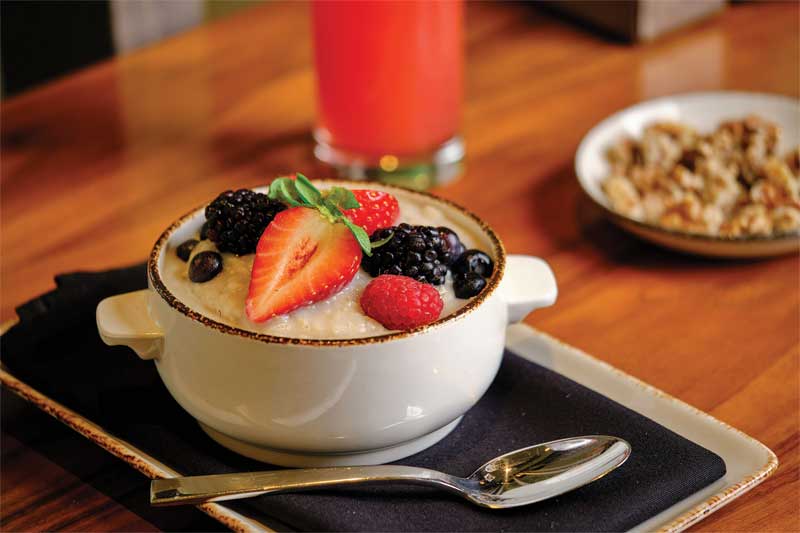
Cut the number of courses. Instead of a three-course lunch, take it down to two and lose the dessert. “Dropping the dessert is more cost effective than dropping the first-course salad,” Steffenson says. “While your protein is usually the most expensive thing on your menu, the dessert usually comes in second. Oftentimes, desserts aren’t even touched at lunch, so you can save quite a bit by dropping them altogether. If you really want to offer something sweet, perhaps instead do a smaller one-bite dessert, which will still be cheaper.”
Another option: Move the dessert to the afternoon snack. “At an event, people are getting a lot more food than they would be at home, especially at lunch,” Mainprize says. “We often ask hotels if we can split dessert off from lunch and serve it in the afternoon so we don’t have to add a separate snack whenever the break is. That’s a great help. People feel they are getting a little something extra, they aren’t eating as much lunch, and it helps your budget.”
Curb cocktail costs
Cocktail receptions can eat up a lot of the F&B budget. Shorten the event time. “We had one client choose to do a shorter cocktail reception,” Stuckrath recalls. “It was only one hour scheduled right before dinner, and then people went offsite for dinner. Our client only had to incur the cost of the one-hour reception.”
If hors d’oeuvres are on the menu for happy hour, try smaller passed appetizers rather than plated to decrease the amount of food leaving the kitchen, Stuckrath suggests.
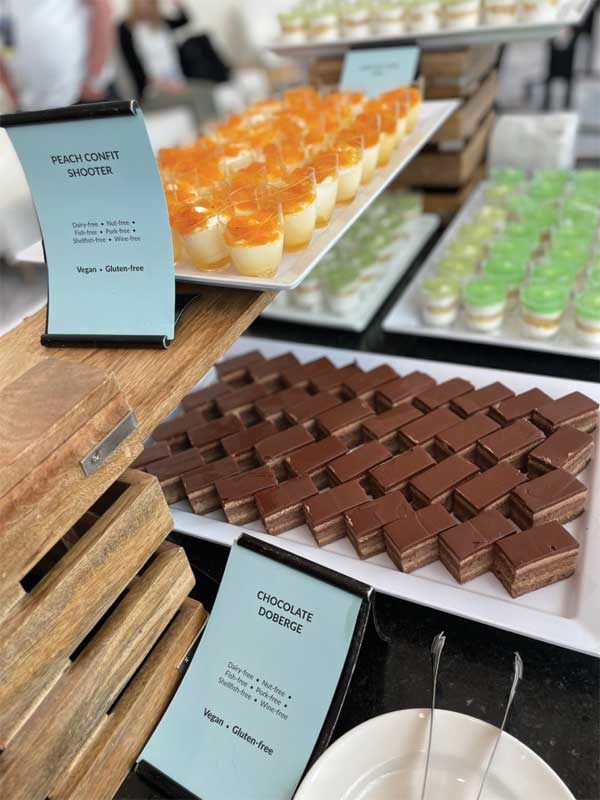
If serving hors d’oeuvres takes too much of the budget, Wilson suggests instead offering a cheese and fruit display or some sort of grazing table, which visually makes a big impact but is usually even more budget friendly. “With that you can incorporate all sorts of items like nuts, grilled veggies, and small salads in small bowls,” Wilson says. “It will appeal to everyone but isn’t a full meal, and it also takes out the requirement of multiple servers—one person can come in and set it up.”
The cost of beverages can add up quickly. Consider skipping the open bar, offering only beer and wine, or limiting the number of free drinks. “That’s a huge way to control your budget,” Mainprize says. “I’m seeing many groups provide a certain number of drink tickets, and after that it’s a cash bar for attendees to purchase more if they would like.” Also, low- or no-alcohol drinks continue to be popular, and these less-expensive mocktails are tasty and visually appealing.
Saving by sharing
Hotels also are being hit with higher prices, and some are taking proactive measures that could benefit planners. “Our culinary teams are reviewing menus with greater frequency, ensuring best price and availability,” says Petr Raba, vice president of Marriott International’s Global Meetings and Events Operations for the United States and Canada. “In addition, hotels are offering shorter menus that further assist with food cost through streamlined inventory management, reduced food waste, and proficiency with menu items.”
Some hotels now offer a preset lunch menu for groups, a cheaper option than creating a custom menu for each gathering. And because bulk food orders take advantage of economies of scale, talk with the food and beverage manager to see if you can piggyback your menu on those of other groups at the hotel. “You don’t have to have a completely different menu from the group down the hallway,” Stuckrath advises. “When chefs can buy in bulk, they are saving money, and that can help reduce your cost, as well. Ask what others are doing, and see if it works for you to jump in on what they are ordering.”
Talk with the chef about budget-friendly food items. For example, a group requesting sea bass could save by substituting an alternate, but similar, fish. “If they give me the opportunity to educate them, I can share that there are alternatives, such as cod or grouper, that are less expensive, more sustainable, and will taste just as good with our culinary skills,” Wilson says.
Take it on the road
Slash the cost of F&B by going offsite for a meal. In addition to a smaller bill, leaving the hotel provides a change of scenery and offers a flavor for the destination with a taste of the local culture and cuisine—cited as a priority by today’s attendees.
“Historically, if you can take a group offsite without having to involve transport, it’s a definite way to save money,” Mainprize says. “Some groups don’t have a choice; they aren’t in a city where it’s easy to do. But we’re now having the conversation with clients about it often.”
Even if the location or agenda doesn’t allow for an offsite meal, there are options. Food trucks are enormously popular, and an increasing number of hotels are allowing groups to bring them in for an event. Some groups are cutting lunch from the agenda, bringing in food trucks, and leaving attendees to decide on—and pay for—their own meal.
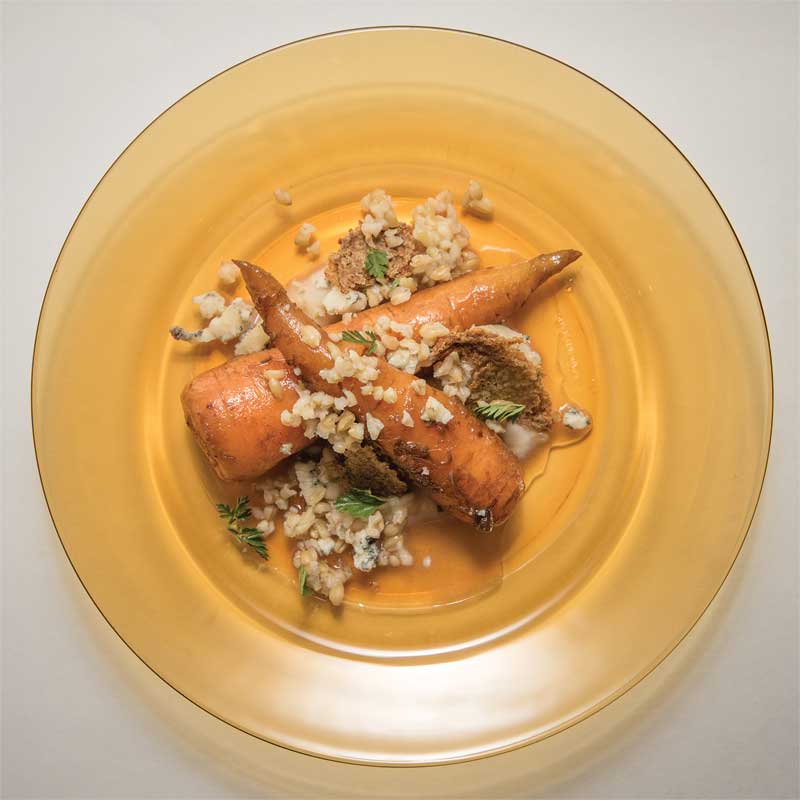
“We had one group that dropped the lunch option and brought three food trucks onsite so attendees had the option of one of the hotel’s offerings or walking outside to a food truck,” Wilson says. “The group was able to take a big expense off their plate but still made sure accommodations were available for their attendees, who loved it because the food trucks had a variety of menus that highlighted the local culture.”
The advice served up by these experts proves the value of thinking outside the lunchbox. The necessity of soaring F&B costs (along with everything else) paired with changing palates, personal preferences, and greater awareness of allergies and other dietary restrictions make meatless menus, gluten-free and peanut-free options, vegan varieties, and healthy offerings flavorful food for thought.