Eco-friendly destinations continue to draw guests, and venues are leading the way in sustainability initiatives. EV charging stations, eco-friendly packaging, recycling bins, and water re-filling stations are just the start. Add contactless technology, onsite gardens, alternative transportation options, and overall energy reduction, and you get a picture of the practices becoming the norm for convention venues.
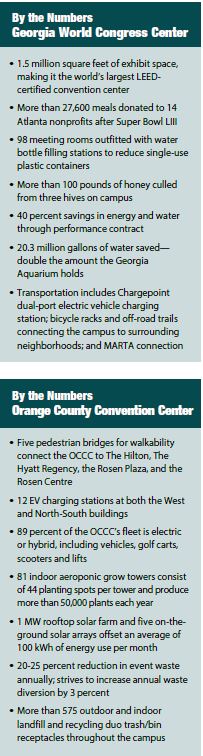
“It’s extremely important to us,” says Shavannia Williams, director of strategic partnerships for the Georgia World Congress Center (GWCC) in Atlanta. The GWCC is a world leader in sustainable projects and programs, but it is also about being responsible neighbors. In fact, it is part of the GWCC’s mission statement. “It’s the North Star to every decision I am making,” Williams says. “We are not just in the business of events, but to enhance the quality of life.”
Jasaun M. King, public information officer for the Orange County Convention Center (OCCC) in Orlando, says event planners are looking for environmentally friendly venues. “Within the last decade, sustainability has become, and has remained, a top priority for clients, as groups focus on expanding corporate social responsibility and incorporating eco-friendly practices,” King says.
“While it is part of the OCCC’s mission to preserve and protect the central Florida community, events coming to the OCCC take positive action to support and conserve the precious resources in Orange County,” King says. “It serves as a testament to their success to have a successful show while also working together with us to give back to the community.”
At the GWCC in Atlanta, the drive for operational excellence comes from the leadership down, and clients benefit by having a venue and host with committed, shared values. “We are proud to be a leader in this space,” Williams says.
GWCC’s commitment is to operate efficiently and provide leadership to produce net-zero events. The evidence is in the GWCC’s Gold Leadership in Energy and Environmental Design (LEED) certification, and its Energy Savings Performance Contract with Trane, the largest such stand-alone project in Georgia—and the largest in the country for public assembly venues.
The GWCC’s recycling and repurposing program works with internal and external partners to decrease material waste after conventions, such as banners, signs, and exhibit displays. Donations are made to local nonprofits, including Atlanta Habitat for Humanity, the Furniture Bank of Metro Atlanta, Atlanta ToolBank, Meals on Wheels, and the Salvation Army, among others. Excess food is donated to One Heart Ministries, Atlanta Community Food Bank, and Second Helping, which received 900 pounds of food last fiscal year alone. About 119 billion pounds of food is wasted each year in the United States, according to Feeding America.
There is not one aspect of sustainability at the GWCC; it is the overall approach. Clients have high expectations, and GWCC delivers. “Our clients are impressed with our forward-thinking,” Williams says.
Retrofitting the water-efficiency systems and boiler rooms, and upgrading other energy-saving performances has drawn attention from environmentalists, event planners, and hospitality industry leaders. “We hold sustainability tours to educate others about practices and programs we have on campus,” Williams says.
It is an initiative more than a decade in the making, and which continues through partnerships, self-monitoring efforts, evaluation, and audits. “We look deep and wide into all areas,” Williams says. “We have a real understanding of where we are and how we can improve—mapping out the next three to five years.”
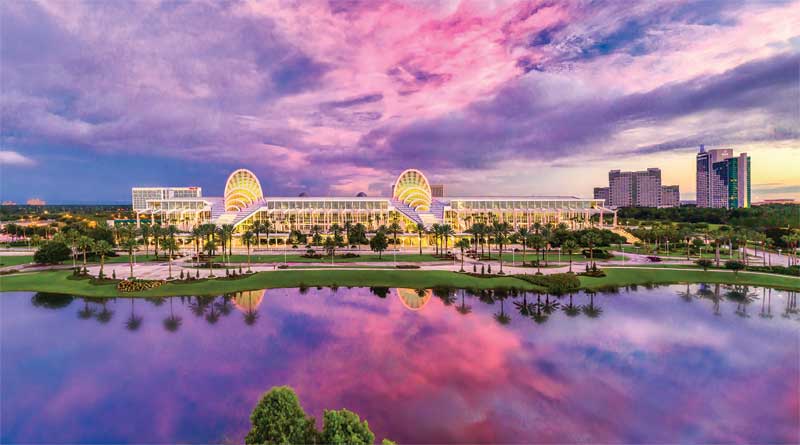
OCCC also leads by example to make the central Florida region a more sustainable and resilient place to live, visit, and do business. “The OCCC offers a dedicated sustainability team to help clients achieve their green event goals,” King says. “OCCC offers a wide range of innovative and large-scale sustainability programs, such as sustainable menu and food options, charitable items and food donations, water diversion, and post-event sustainability reporting.”
The OCCC North-South Building is one of the largest LEED Gold-certified convention centers in North America. It includes the 1MW (one million watt) rooftop solar farm, nine EV charging stations on its campus, and a 1,000-square-foot Monarch Buttery Conservation Garden.
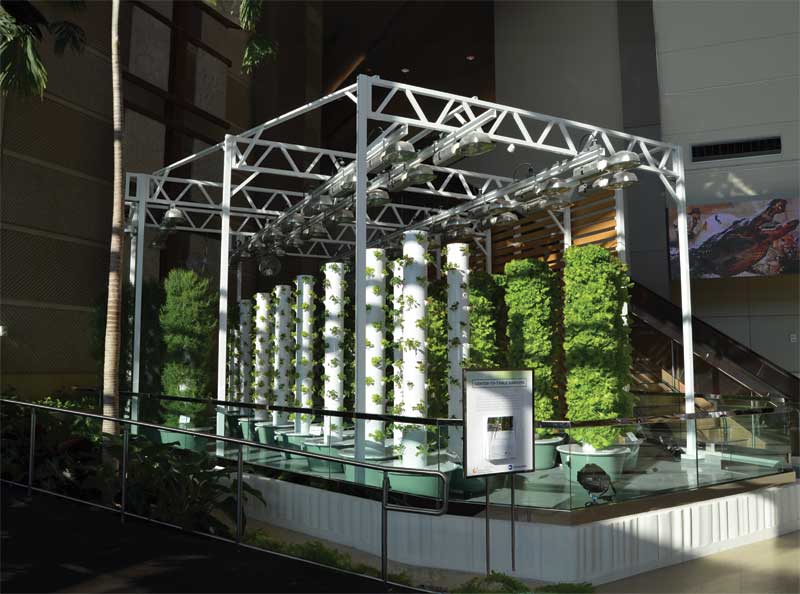
Additionally, OCCC is proud of is its indoor “center-to-table” garden, with 81 vertical hydroponic towers that produce 50,000 plants annually, including kale, rainbow chard, basil, celery, peppers, spinach, and more. Those plants are used in partnership with Sodexo Live! to offer sustainable food options for its clients.
Other sustainability features at OCCC include back-of-house composting within kitchens for every event, and front-of-house composting in partnership with O-Town Compost for food-centered areas in the exhibit hall or banquet rooms.
The benefits of providing environmentally friendly amenities are being seen in the hotel industry. The Beyond Green portfolio of hotels recently launched its first Global Impact Report, underscoring the brand’s commitment to sustainability and the effect of its member initiatives. The report (StayBeyondGreen.com/GIR) used data from a member sustainability survey to demonstrate the power of sustainable tourism in safeguarding the planet’s natural environment, celebrating cultural heritage, and enhancing the lives of local communities. The survey showed that more than 90 percent of Beyond Green members have a dedicated sustainability manager, and 35.5 percent of member properties have a “green team.”
Beyond Green, established by Preferred Travel Group in April 2021, unites sustainability leaders worldwide to transform the travel industry, using 50 sustainability indicators that align with global travel standards and United Nations Sustainable Development Goals.
This year, Best Western Hotels & Resorts (BWH) started a collaboration with Tesla to install universal wall connectors—electric charging stations—at select hotels in North America. The charging stations are designed to seamlessly charge any North American vehicle model, expanding Tesla’s efforts to make charging available to all EVs.
The addition of Tesla electric vehicle charging stations is just one example of BWH’s commitment to protecting the environment, with hotel operators also working to reduce their carbon footprint and conserve energy and water.
BWH is part of the Sustainable Hospitality Alliance and created its “Because We Care” initiative. The program supports its hoteliers to implement their own policies, such as allowing guests to opt out of housekeeping services during short stays, providing biodegradable cutlery, and donating unused toiletries to local nonprofits.
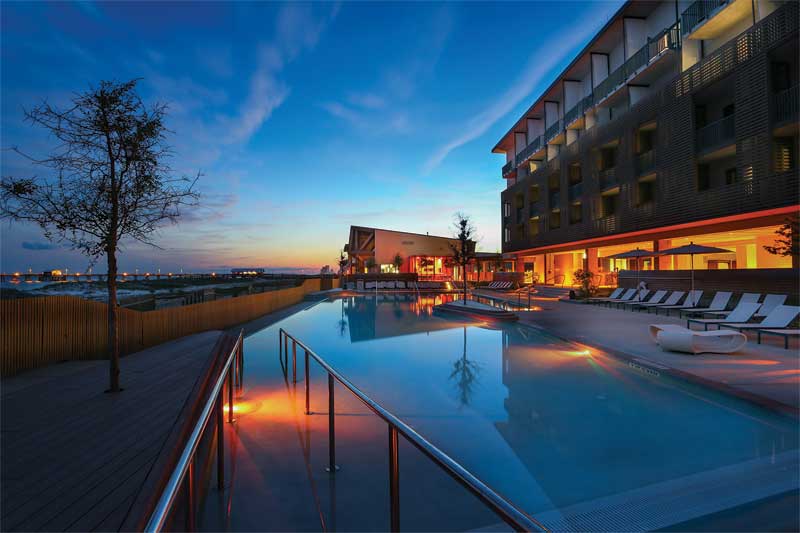
The Lodge at Gulf State Park, on the Alabama coast, is recognized for its conservation efforts. Featuring more than 40,000 square feet of flexible indoor and outdoor event space, as well as additional gathering and reception areas, the Lodge hosts hundreds of meetings each year, with attendees ranging from 10 to 500 people. Kurt Fedders, marketing manager for the 350-room resort, explains, “The Lodge is focused on sustainable tourism—the idea that we can have environmentally friendly facilities and operations while protecting and celebrating our natural resources and cultural heritage, while also being a good community partner.”
 Those efforts began at construction. The full-service resort used eco-friendly construction and certifications, meeting the LEED Gold standard, the SITES Platinum, and Fortified commercial certifications. During construction, more than six football fields of coastal dunes and native plant communities were protected within the building site.
The Lodge’s HVAC system collects and recycles condensation that is then used to replace the water in the pool. Stormwater from the building’s roofs and paving is naturally filtered and absorbed through a functional wetland, rather than being diverted to a sewer. The facility also features a permeable parking lot that uses TrueGrid technology to allow rainwater to drain into the ground.
In guest rooms, air conditioning units have sensors that cut off the units if balcony doors or windows are left open or ajar. Energy-efficient lighting and motion sensors also reduce unnecessary waste and energy. Buildings are positioned to take advantage of gulf breezes for natural ventilation and lighting through passive cooling techniques, while wood screens filter sunlight and reduce energy use. Also, its Zero Single Serve Initiative promotes discontinuing single-serve items for guests.
The Lodge also takes sea life into consideration, practicing local sourcing and invasive species fish harvesting through its Bycatch Seafood Program, which helps local fishermen sell their unintentional species to serve in its restaurants. Sea turtle-friendly lights are shielded from turtle nesting areas, pointing away from the beach. Beachside lights are warmer to be less confusing to wildlife. The lighting is important because sea turtle hatchlings emerge on moonlit nights and follow lights to the water; artificial light interferes with that natural process. Because the Lodge’s property is home to many Gulf Coast species, 75 percent of the site is landscaped so wildlife can thrive without irrigation, chemical pesticides, or fertilizers.
“With the natural beauty of our surroundings in Gulf State Park, our guests appreciate knowing that we aren’t just talking about being good environmental stewards,” Fedders says. “They can actually see many of those efforts at work—from our sea turtle-friendly exterior lighting to our bulk amenity dispensers in our guest rooms, to our efforts to eliminate single-use plastics where possible.”