There’s something undeniably compelling about gathering in a space that has already lived a full life. Across the South, a growing number of hotels and event venues are rewriting their stories—former train depots where passengers once hurried toward distant destinations, stately banks that safeguarded fortunes, post offices that connected communities, and government buildings that shaped civic life. Today, these architectural landmarks have been reimagined as distinctive settings for meetings and conferences. Preserved brick walls, soaring ceilings, and architectural details that hint at their past infuse meetings with authenticity and a strong sense of place, turning history into a built-in storytelling element. These thoughtfully transformed properties honor their origins while delivering the character, atmosphere, and memorable backdrops that elevate today’s events.
Trilogy Hotel Montgomery | Ala.
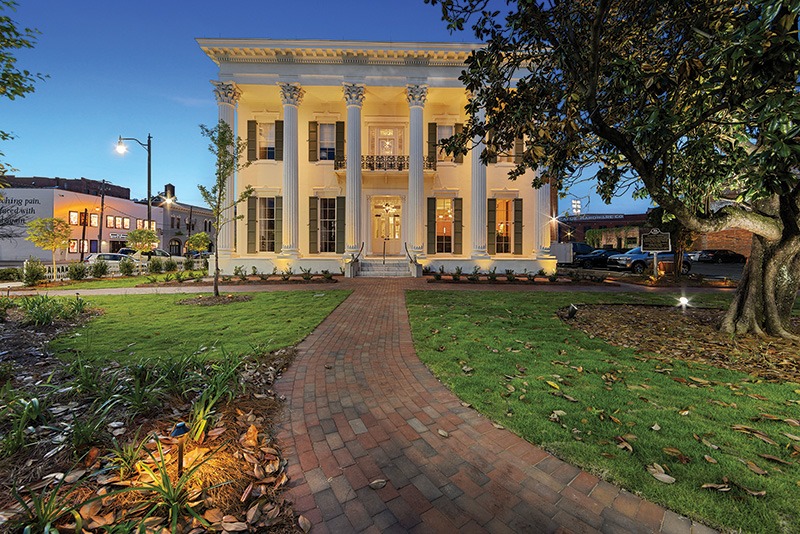
In the heart of downtown Montgomery, Trilogy Hotel Montgomery lives up to its name in the most literal way. The property unites three historic structures into one cohesive boutique experience, anchored by the 1851 Greek Revival Murphy House, built for prominent cotton broker John H. Murphy. Over the decades, the residence evolved with the city—serving as home to the Beauvoir Club, later the Elks social club, and eventually housing the Montgomery Water Works and Sanitary Sewer Board after preservation efforts in 1970 spared it from demolition.
Today, the restored mansion houses Kinsmith, the hotel’s signature restaurant, while two early 20th-century warehouses round out the campus with industrial character. Original architectural elements remain focal points, including a preserved wooden staircase connecting meeting spaces and historic mirrors that quietly reflect the building’s varied past.
With the 2,100-square-foot Tallapoosa Ballroom, rooftop spaces, and even breakout areas, Trilogy offers versatile function space that’s also steps from Civil Rights landmarks and the Alabama River.
The Empress of Little Rock | Ark.
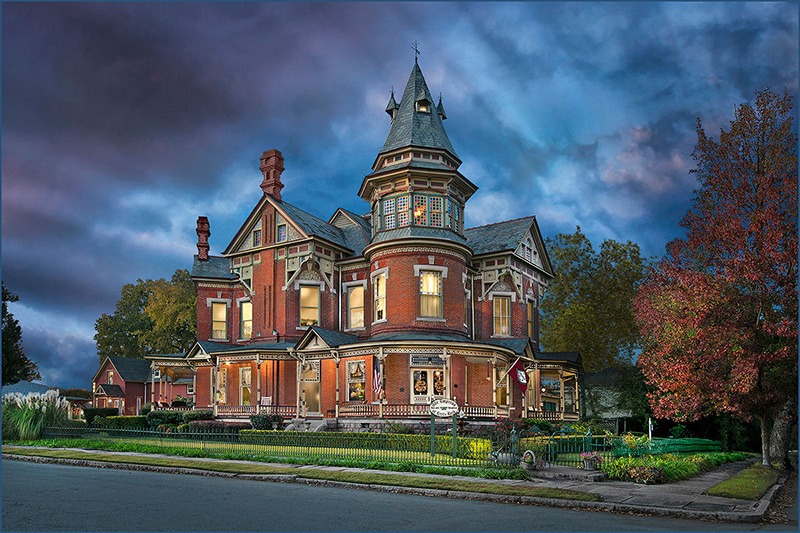
In the historic Quapaw Quarter of Little Rock, The Empress of Little Rock is one of the city’s most storied addresses—a Victorian showpiece born of rivalry, ambition, and craftsmanship. Built in 1888 for saloon owner James L. Hornibrook, the mansion took six years to complete, with every uniquely shaped brick formed on site. Legend holds that Hornibrook delayed construction until a competitor’s grand residence was finished, determined for his own home to eclipse it in scale and detail.
The result is a richly layered property that has served as a family residence, Arkansas’ first women’s college, a private home, wartime lodging, and a nursing and assisted living facility before its restoration in the 1990s as a bed-and-breakfast and event venue. Today, the main floor remains much as it would have in the late 19th century, complete with dual grand staircases, 14-foot ceilings, pocket doors that open to create expansive gathering space, and parlors ideal for executive discussions.
Ten guest rooms, garden space for up to 100 guests, and distinctive settings—from the formal dining room to the stained-glass poker room tucked in the attic—offer a backdrop unlike any conventional venue, where every meeting unfolds amid authentic Arkansas history.
Le Méridien Tampa, The Courthouse | Fla.
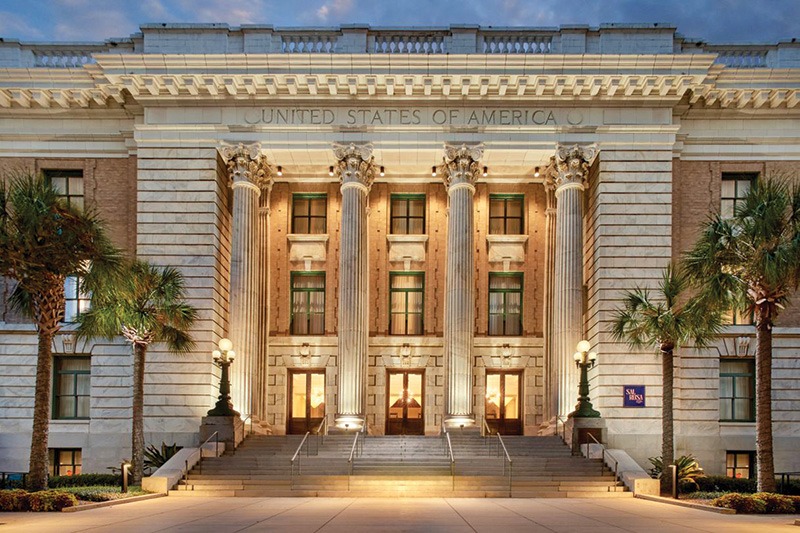
Set within the former federal courthouse in downtown Tampa, Le Méridien Tampa, The Courthouse, a century-old landmark, has been thoughtfully renovated into a boutique hotel. Preserving its architectural somberness while introducing contemporary comfort and technology, the transformation boasts iconic courtrooms repurposed as refined venues, lending a sense of occasion to everything from board meetings to receptions.
The property features 4,800 square feet of meeting and event space designed to balance historic character with modern functionality. At the heart of it all is the Courthouse Ballroom, restored to much of its original glory and comfortably accommodating medium to large groups. With more than 2,200 square feet of venue space, it maintains its architectural distinction: vaulted ceilings, floor-to-ceiling windows, and panoramic city views, all of which create a grand atmosphere grounded in history.
Beyond the meeting spaces, its 130 guest rooms blend preserved architectural details with state-of-the-art amenities, while original stonework and stately proportions throughout the property serve as a constant reminder of the building’s civic legacy.
Columbus Georgia Convention & Trade Center
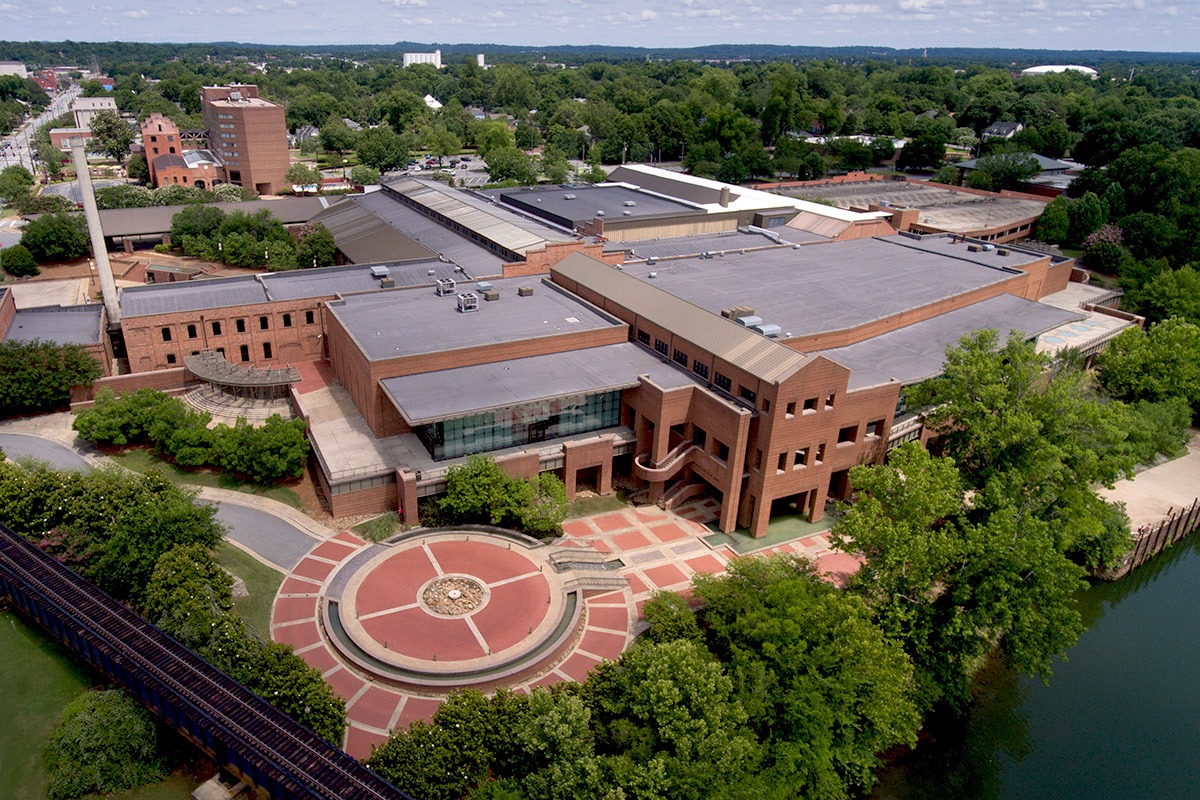
Designated a national historic landmark, the Columbus Georgia Convention & Trade Center traces its story back to 1853, when the property began as an iron foundry producing kettles, brass castings, and steam engines used to power grist and lumber mills, riverboats, and cotton gins for regional commerce. Officially transformed into an event center in 1979 and later expanded in 2004—after being burned and rebuilt, twice—the convention center has grown while preserving the architectural character and industrial spirit defining it today.
Inside, such spaces as the South Hall and North Hall honor the building’s working past through exposed historic iron work lining the walls, paying homage to the machinery and craftsmanship that once powered the mill. Vintage industrial details, including preserved iron wheels and an original elevator located in South Hall, remain as quiet reminders of the site’s long history. The Iron Works Ballroom and Foundry spaces continue this storytelling, with exposed brick and pre-function gathering areas and balcony views overlooking the Columbus RiverWalk.
A small second-floor museum space further honors the property’s heritage, displaying artifacts and historical pieces telling the story of the building and the community it has long served.
Round Barn | Lexington, Ky.
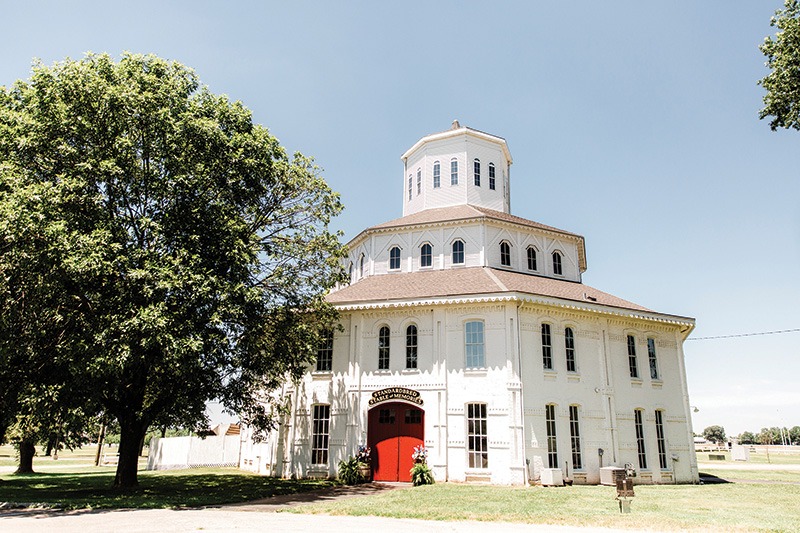
In the heart of Lexington is the Round Barn, a circa-1881 historic landmark. Originally designed as an exhibition hall before later serving as a harness racing stable, the four-story circular structure has been lovingly preserved and transformed into a unique event venue that carries the romance and spirit of Kentucky’s racing tradition. Today, the venue celebrates its past through thoughtful design touches, including several historic carriages from Red Mile’s racing history, helping to recreate the ambiance of a working stable while honoring the site’s storied legacy.
At the center of the barn, a cascading chandelier provides dramatic lighting that reflects off exposed wooden beams, original brickwork, and elegant drapery to create a rustic yet refined setting. The adjacent Red Mile Harness Racing Museum further connects visitors to the venue’s heritage, displaying artifacts and memorabilia chronicling the track’s long and celebrated history.
Designed for versatility, the Round Barn accommodates both intimate gatherings and large-scale celebrations, offering flexible floor plans, convenient parking, and proximity to downtown hotels, restaurants, and Lexington’s entertainment district. With an adjacent lodging option for added convenience, it remains one of the Bluegrass region’s most distinctive historic event spaces.
Hilton New Orleans St. Charles Avenue
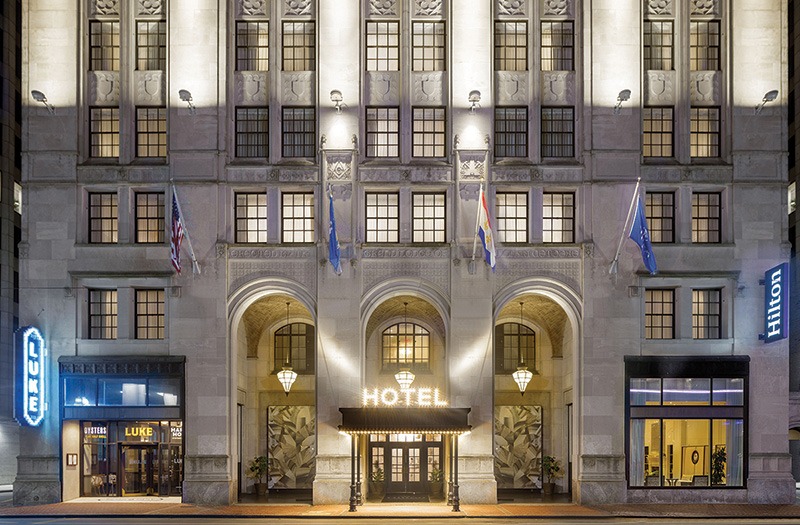
Along storied St. Charles Avenue in New Orleans, Hilton New Orleans St. Charles Avenue offers both 1920s grandeur and contemporary convenience. Originally constructed in 1926 as the Louisiana Masonic Temple, the building remains a presence in the Central Business District, with architectural details—including ornate ceilings, intricate moldings, and luminous stained glass—that feel distinctly New Orleans.
The hotel’s 10,119 square feet of event space spans seven meeting rooms, each infused with historic character. The largest venue accommodates up to 2,320 square feet of flexible setup space, ideal for conferences, board meetings, and receptions. Beyond the ballroom, 252 guest rooms provide comfortable accommodations within walking distance of the French Quarter, Caesars Superdome, and Ernest N. Morial Convention Center.
Outside, the St. Charles streetcar line and Mardi Gras parades pass directly by the hotel’s doors, offering attendees an authentic connection to the city’s pageantry and rhythm.
Visitation Hotel | Frederick, Md.
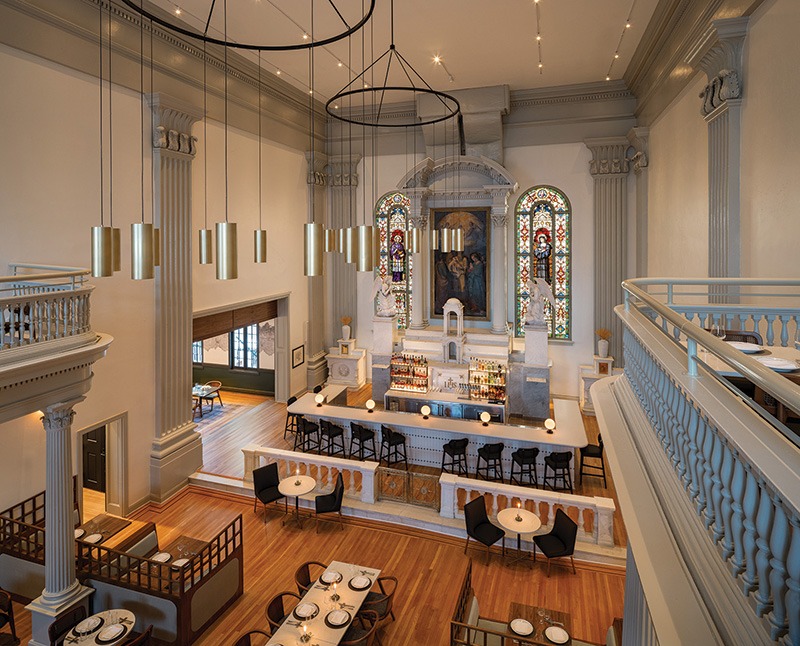
At Visitation Hotel in Frederick, faith, education, and community history are carefully preserved within a beautifully reimagined setting. Originally established as part of the Visitation Academy, the site’s story stretches back to 1824, when the monastery was first occupied by the Sisters of Charity, who helped establish one of the city’s earliest schools for young girls. Over the decades, the property evolved under the stewardship of the Sisters of the Visitation, becoming a cloistered academic and spiritual home that carried forward a legacy of service, learning, and resilience.
Today, the hotel honors its heritage through thoughtful preservation and restoration. The historic chapel remains a defining landmark, featuring Franz Mayer stained-glass windows, a marble altar base, and an Italian oil painting titled The Presentation in the Temple. Renovations over the years have added architectural details, such as statues, side altars, and gold doors, helping maintain the chapel’s historic character while allowing it to function as a preserved cultural space.
With 65 guest rooms and suites, the property also offers meeting and event spaces reflective of its monastic past, including the preserved chapel space, cloistered gardens spanning 1,800 square feet, and restored interior gathering rooms, such as the 2,714-square-foot Academy Ballroom and the 978-square foot Cloister Room.
Monmouth Historic Inn & Gardens | Natchez, Miss.
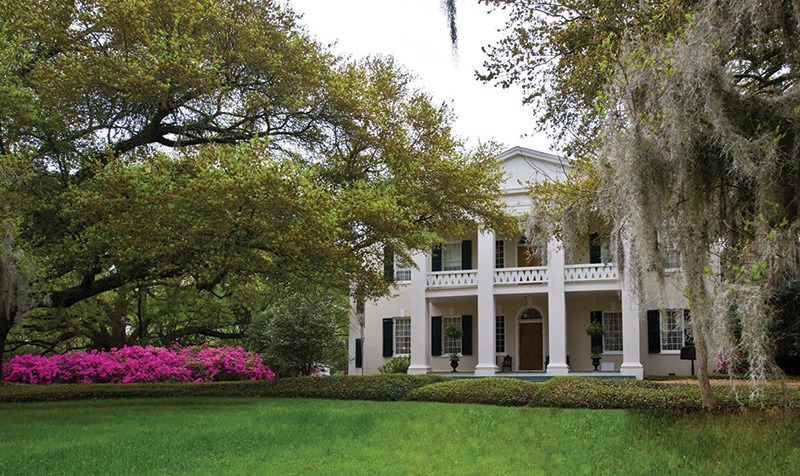
Set amid 26 acres of manicured gardens in Natchez, Monmouth Historic Inn & Gardens is steeped in history and architectural grandeur. Built in 1818 and designated a National Historic Landmark, the antebellum mansion serves as one of the region’s most evocative estates.
The main house, once home to prominent statesman and military leader John A. Quitman, now welcomes guests with period furnishings, museum-quality antiques, and carefully restored details honoring the 1830s era. Thirty guest rooms and suites, located in the mansion and surrounding outbuildings, blend historic character with modern comfort, ensuring a stay that feels immersive in the original time period, yet refined.
For meetings and conferences up to 150 guests, Monmouth provides an atmosphere unlike conventional venues. Gatherings unfold beneath sparkling crystal gasoliers in Restaurant 1818, in intimate parlors, such as the Quitman Study, or outdoors amid blooming magnolias and centuries-old oaks. As Natchez’s only AAA Four Diamond hotel for four decades, Monmouth pairs gracious hospitality and award-winning cuisine with a profound sense of place.
St. Louis Union Station Hotel, Curio Collection by Hilton
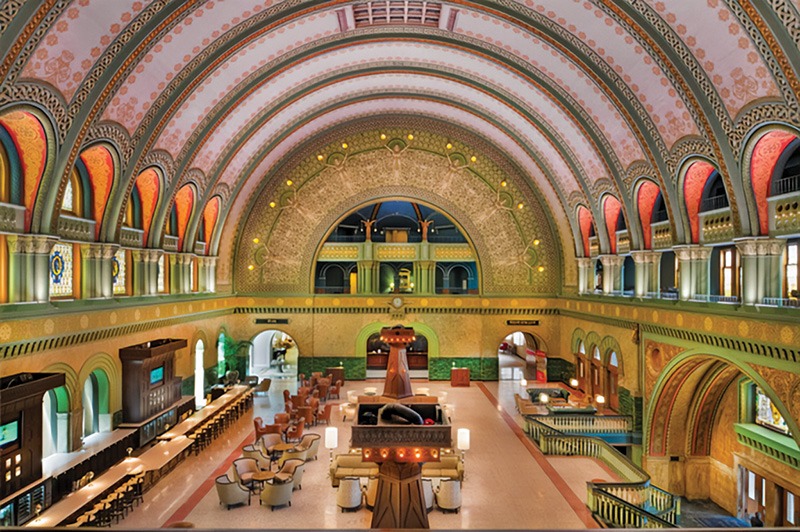
Few venues capture historic grandeur quite like St. Louis Union Station Hotel, Curio Collection by Hilton in downtown St. Louis. Opened in 1894 as the largest and busiest train terminal in the nation, the castle-like landmark—designed to echo the fortress city of Carcassonne, as a nod to the city’s French heritage—remains a designated National Historic Landmark and an unforgettable setting for meetings of every scale.
Today, the 567-room hotel offers 100,000 square feet of flexible meeting and event space, including 40 meeting rooms, expansive ballroom space, and the Midway, ideal for trade shows and large gatherings, just steps from guest accommodations. At the heart of the experience is the restored Grand Hall, returned to its 1894 glory with a soaring 65-foot barrel-vaulted ceiling, which serves as the canvas for an award-winning 3-D light show.
Beyond the meeting rooms, attendees can find themselves immersed in a destination unto itself, with such attractions as the St. Louis Aquarium at Union Station and the towering St. Louis Wheel, just outside the door.
The Foundry Hotel | Asheville, N.C.
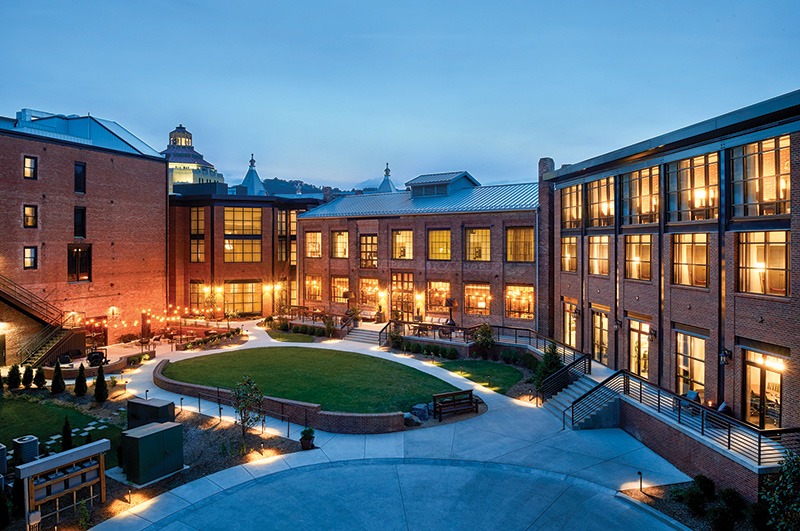
The Foundry Hotel offers a setting where history is not simply preserved but rather part of the experience. Located in downtown Asheville within The Block, the city’s oldest African American business district, the property traces its roots to 1915, when the Asheville Supply and Foundry Co. produced the steel and materials used in the construction of regional landmarks, including Biltmore House and Asheville City Hall.
After decades of dormancy, the former foundry reopened in 2018 as an 87-room boutique hotel, blending three historic buildings with two modern additions.
Today, exposed beams, steel star fastenings, industrial-style windows, and the original pulley elevator create an authentic architectural backdrop for gatherings. The hotel features more than 3,000 square feet of flexible indoor and outdoor event space, including the spacious Event Lawn, ideal for larger al fresco events, and the light-filled Savoy Ballroom, for smaller receptions and executive meetings.
Fordson Hotel OKC | Oklahoma City
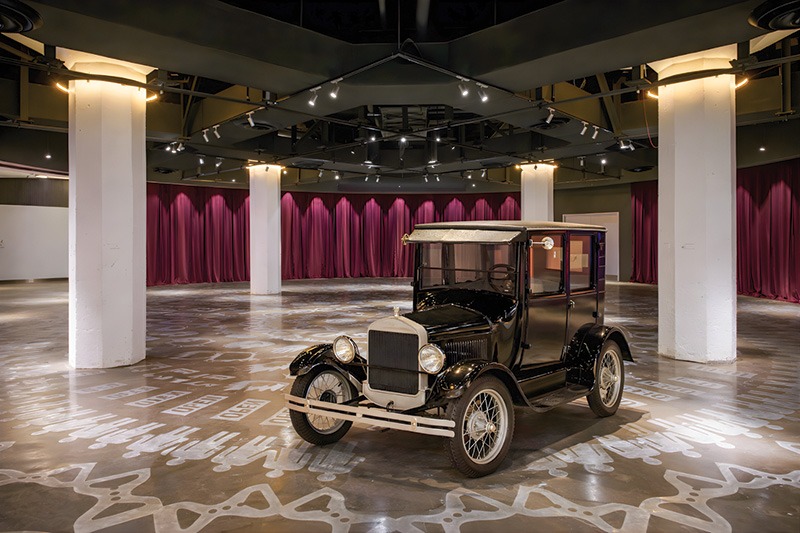
In Oklahoma City’s West Village District, Fordson Hotel OKC is a consistent reminder of the city’s industrial roots and entrepreneurial spirit. The property occupies the former Ford Motor Co. Assembly Plant, a landmark facility designed by renowned industrial architect Albert Kahn and long associated with local automotive leader Fred Jones. Listed on the National Register of Historic Places, the building reflects more than a century of manufacturing heritage, which helped shape Oklahoma City’s growth during the height of the Industrial Revolution.
Today, that legacy is preserved in the 135-room hotel’s architecture, where vintage fixtures, high ceilings, and expansive industrial windows nod to the structure’s assembly-line past. Original materials and design elements remain integral to the aesthetic, yet, within those historic walls, guests find contemporary comfort and hospitality.
For meetings and events, Fordson Hotel OKC boasts 14,000 square feet of flexible breakout rooms, indoor and outdoor venues, a private dining room, and a 5,400-square-foot penthouse with patio.
The Lantern | Columbia, S.C.
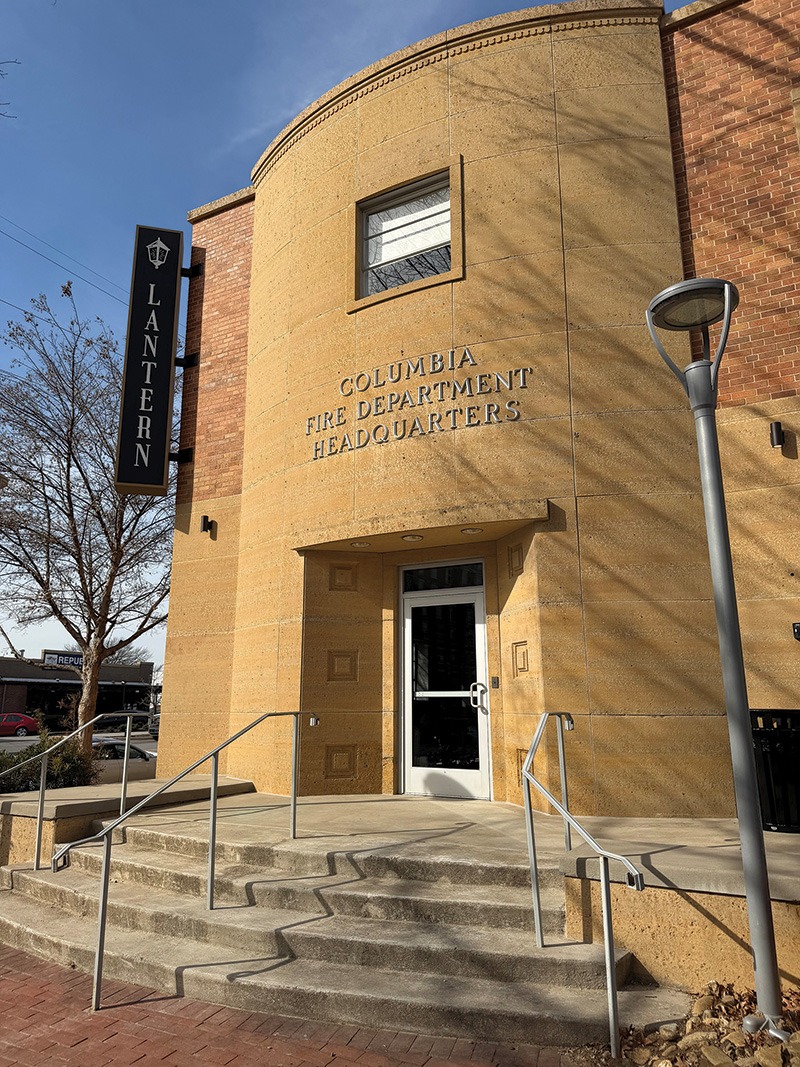
In the heart of the Vista District in Columbia, The Lantern brings new energy to a storied setting. Spanning three historic buildings, including the framework of the city’s original firehouse, the boutique hotel layers the historic space with polished mid-century modern interiors.
The former Ladder 13 fire station now houses a Mediterranean-inspired restaurant and bar, where brick walls and architectural remnants nod to the property’s past while setting the stage for memorable welcome receptions and post-session gatherings. For planners seeking an off-the-grid board retreat or leadership session, the hotel’s intimate scale—59 thoughtfully designed rooms and suites—allows groups to feel fully immersed. Clean lines, calming tones, and custom details offer a sophisticated counterpoint to the building’s industrial bones. The standout Fire Tower suite delivers sweeping views of Columbia’s skyline, ideal for VIP stays or small executive conversations with perspective.
Beyond the hotel, attendees are steps from the University of South Carolina campus and the Statehouse, as well as the Vista’s galleries and dining scene.
The Union Station Nashville Yards | Tenn.
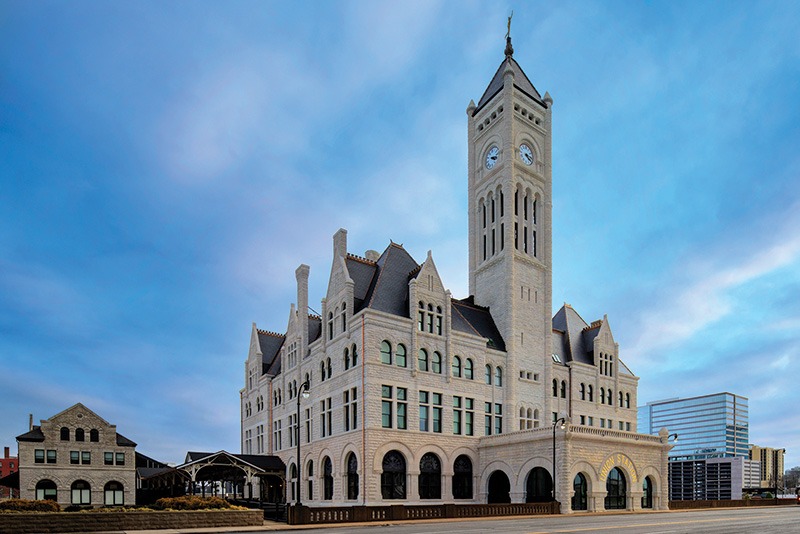
Distinguished by its Gothic Revival architecture and storied past, The Union Station Nashville Yards is one of the city’s most architecturally significant event destinations. Opened in 1900 as a bustling terminal on the L&N Railroad, the Gothic landmark—complete with turrets, towers, and heavy stone Richardsonian-Romanesque detailing—was an architectural marvel of its era. Today, the former train station is a member of Historic Hotels of America and is listed on the National Register
of Historic Places.
The Grand Lobby serves as the crown jewel for receptions and celebrations. Beneath a 65-foot stained-glass, barrel-vaulted ceiling adorned with gold-leaf medallions and bas-relief angels, up to 300 guests can gather in the space. Nearby, the South Wind and Hummingbird meeting rooms showcase original stained glass and 22-foot ceilings, while the Montfort boardroom provides an executive retreat overlooking the dramatic lobby below.
For open-air events, The Trestle, tucked beneath the Broadway Bridge, delivers industrial edge with historic character, while the Veranda offers a refined, weather-ready setting for up to 250 guests. With 125 guest rooms and suites completing the experience, The Union Station Nashville Yards frames every meeting with Nashville’s storied past.
Hotel ICON Houston
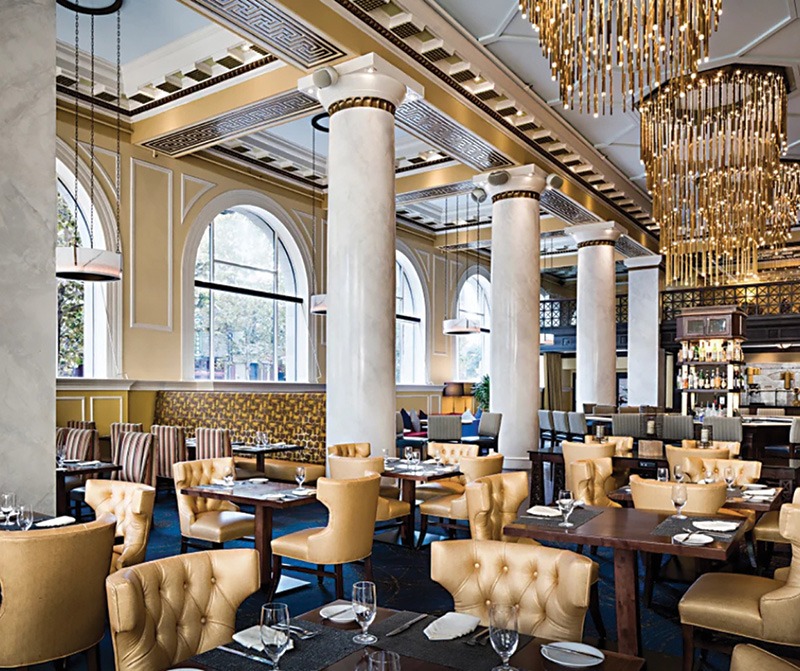
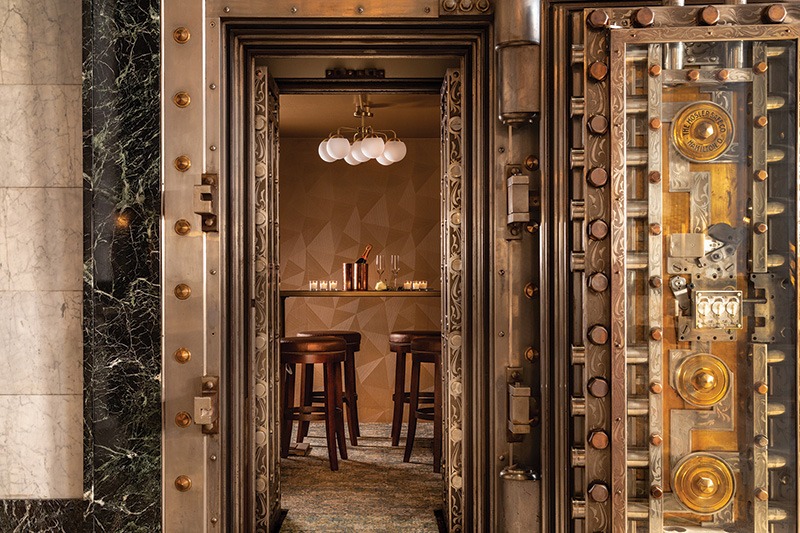
Originally constructed in 1911 as the landmark Union National Bank building, the neoclassical structure that is Hotel ICON Houston has long stood as one of the city’s most architecturally distinguished addresses. Today, as part of the Marriott Autograph Collection, the hotel preserves its period detailing, from the ornate moldings and grand columns to, most notably, the original bank vault, which now serves as a dramatic focal point in the lobby.
For meetings and events, Hotel ICON Houston delivers 8,080 square feet of flexible event space across seven distinct venues. The Aventine Ballroom, the crown jewel of the collection, features 2,363 square feet with 11.7-foot ceilings, accommodating up to 250 guests theater style or 150 for banquets. More intimate gatherings find an executive setting in the refined Executive Boardroom, while the Private Wine Vault offers a truly unique backdrop for private dinners and VIP events.
With 135 guest rooms and 18 suites, and a prime location near Houston’s business and theater districts, the hotel pairs convenience with character.
The Liberty Trust | Roanoke, Va.
Rising seven stories above downtown Roanoke, The Liberty Trust offers a refined boutique setting within the beautifully restored First National Bank Building, originally completed in 1910. Listed on the National Register of Historic Places and recognized as a Virginia Historic Landmark, the structure reflects Greek Revival and French École des Beaux-Arts influences, an architectural statement that once symbolized the city’s progress and prosperity, and now frames gatherings with timeless distinction.
Inside, the former marble-lined bank lobby sets the tone with soaring ceilings and grand columns, while original copper doors—preserved at the entrance and adorning each guest room—serve as subtle reminders of the building’s financial legacy. The Mezzanine Board Room provides 400 square feet of function space, accommodating up to 30 guests for receptions or 15 classroom style, making it ideal for executive meetings and strategy sessions. For receptions and private dinners, The Vault, housed within the former bank lobby, offers a dramatic backdrop defined by historic detailing.
With 54 thoughtfully appointed guest rooms, many overlooking the Blue Ridge Mountains and the iconic Roanoke Star, the hotel creates an intimate, walkable retreat in Virginia’s Blue Ridge.
Waldorf Astoria Washington DC
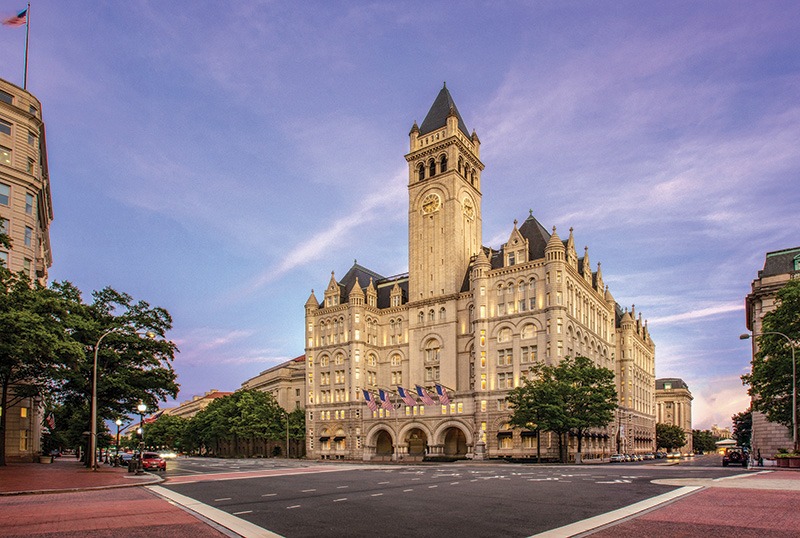
Few addresses in the nation carry the gravitas of Pennsylvania Avenue in Washington, and few meeting venues rival the sense of occasion found at Waldorf Astoria Washington DC. Housed within the magnificently restored Old Post Office, the 263-room hotel stands between the White House and the U.S. Capitol, offering planners a setting framed by the monuments and museums of the National Mall.
The building’s Romanesque Revival architecture, soaring clock tower, and monumental public spaces have been transformed, preserving its history while introducing refined service. For meetings and events, the hotel presents nearly 39,000 square feet of event space, including the Grand Ballroom, where gilded detailing and dramatic scale create a backdrop for conferences and gala receptions alike. More intimate gatherings find distinction in the historic Lincoln Library and Franklin Study.
The Schoolhouse Hotel | White Sulphur Springs, W.Va.
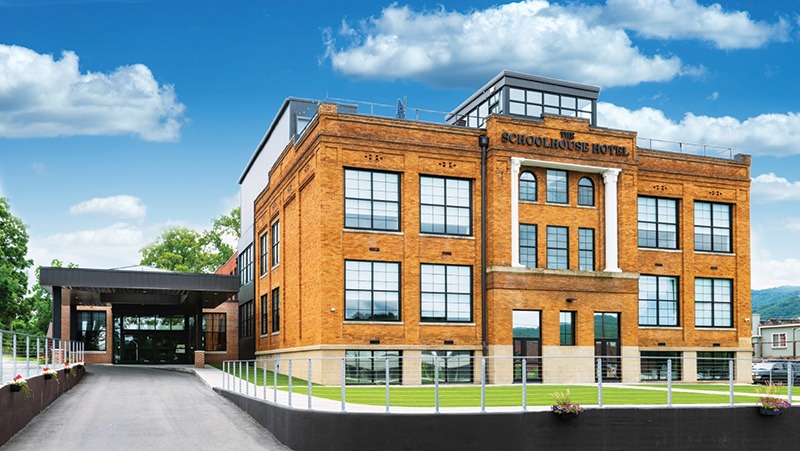
In the heart of White Sulphur Springs, community heritage meets forward-thinking design at The Schoolhouse Hotel. Once the town’s historic high school, the building has been converted into a full-service boutique hotel, preserving its academic character while introducing a fresh chapter as a gathering place.
Original architectural details nod to the property’s past, while 30 uniquely appointed guest rooms incorporate subtle scholastic touches that honor its former life. What distinguishes The Schoolhouse Hotel, however, is its commitment to accessibility. Recognized as the world’s first fully accessible hotel, every guest room and public space exceeds ADA standards, creating an environment where comfort and inclusion are seamlessly integrated into the design.
For meetings and events, the hotel’s flexible ballroom accommodates up to 400 for conferences, retreats, and social gatherings, complemented by The Teacher’s Lounge, a more intimate conference space that’s a great canvas for board meetings, private business dinners, or all-day small team meetings.